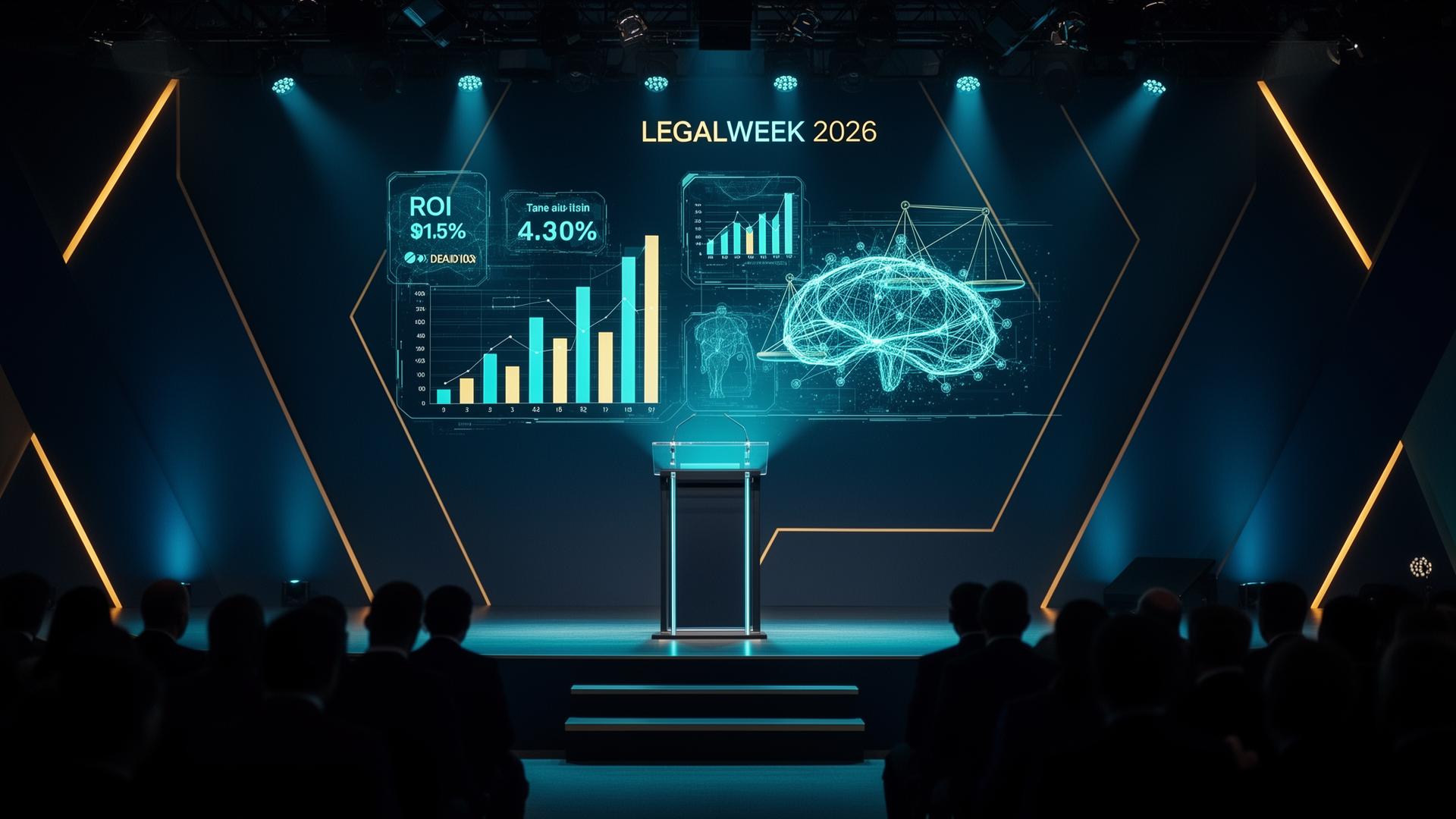

LegalWeek 2026 conference stage with AI ROI analytics
    LegalWeek 2026 Insight Brief

    Beyond the Balance Sheet: Rethinking ROI for AI in Legal

    Why "hours saved" is yesterday's metric — and what forward-thinking firms are measuring instead

    Matthew A. Mishak

    Matt Mishak, Esq.

    Founder & CEO, LegalTek.ai

    12 min readMarch 2026AI ROI & Strategy

    Quantity

    Measurable time saved

    Quality

    Better outcomes & work product

    Quantum

    Entirely new capabilities

    For the past two years, the legal industry has been answering a single question about AI: "How many hours will it save?" That question was useful — it got budgets approved, pilots launched, and skeptics into seats. But in 2026, a growing chorus of legal leaders, CFOs, and technology vendors are saying the same thing: hours saved was always the wrong finish line.

    At a recent industry panel on AI's real-world return on investment, practitioners from a Fortune 10 legal department, a midsize law firm CFO's office, and a legal tech CEO converged on a striking consensus. The old efficiency calculus — input cost, subtract time saved, claim ROI — no longer captures what AI is actually doing to legal work. The returns are broader, deeper, and in some cases, entirely new categories of value that didn't exist eighteen months ago.

    Here's what the conversation revealed — and what it means for firms and legal departments trying to build a credible business case for AI investment in 2026 and beyond.
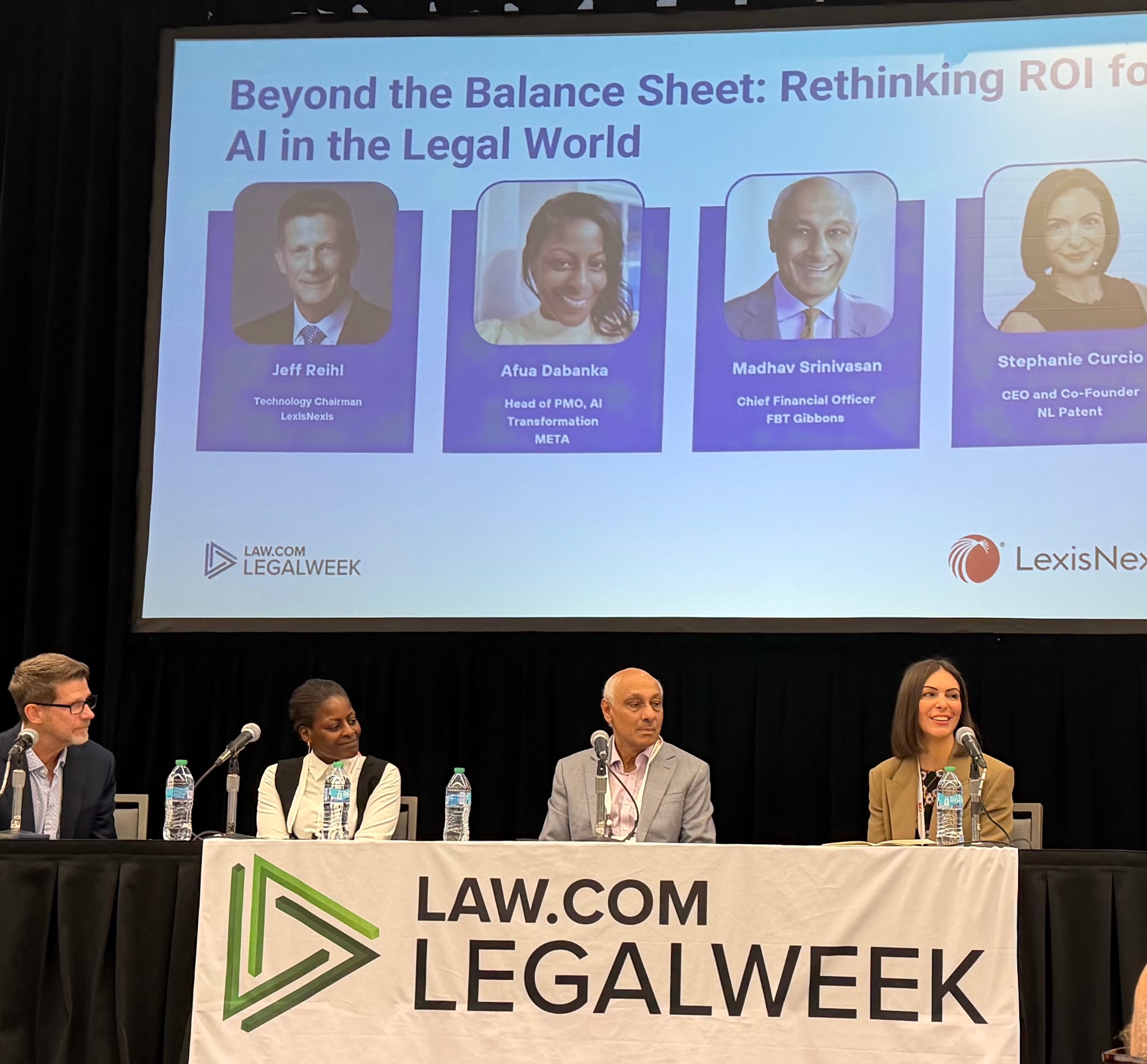
    Beyond the Balance Sheet panel at LegalWeek 2026 — Jeff Reihl (LexisNexis), Afua Dabanka (META), Madhav Srinivasan (FBT Gibbons), and Stephanie Curcio (NL Patent)

    LegalWeek 2026 — "Beyond the Balance Sheet: Rethinking ROI for AI in the Legal World" panel featuring Jeff Reihl (LexisNexis), Afua Dabanka (META), Madhav Srinivasan (FBT Gibbons), and Stephanie Curcio (NL Patent)

    The Three-Bucket Framework: Quantity, Quality, and Quantum

    Perhaps the most useful lens offered during the discussion came from Madhu Srinivasan, CFO of Forvis Mazars' legal advisory practice, who proposed sorting AI's payback into three distinct categories.

    Bucket 1: Quantity

    The familiar one. Measurable time saved: fewer hours drafting discovery responses, faster document review, quicker first cuts of contract analysis. This is where most firms have parked their ROI conversations — and for good reason. It translates directly into hours, rates, and dollars.

    Bucket 2: Quality

    Harder to pin down but no less real. Are your work products more thorough? Are fewer issues slipping through review? Is the data you pull from financial systems cleaner, more contextual, more actionable? Quality improvements show up indirectly: in fewer revisions, stronger client relationships, and better outcomes at trial or settlement.

    Bucket 3: Quantum

    Work that simply was not possible before. Natural language queries across massive financial databases. Predictive analytics on client risk or write-off exposure. Automated compliance monitoring that scales across thousands of matters simultaneously. These are not efficiency gains. They are new capabilities, and their economic value may dwarf the first two buckets over time — even if the payback horizon is longer.

    "The fixation on hours saved is what we're going to laugh about in three years. We should be reimagining entire processes to create new revenue streams, not just shaving minutes off the old ones."

    — Panel Consensus, LegalWeek 2026

    For firms building a business case today, the three-bucket model offers a critical reframe. Not every AI investment needs to show immediate dollar-for-dollar payback. Some investments are strategic bets on capabilities that will compound over time.

    AI Is Collapsing the Law Firm Pyramid

    One of the panel's most provocative insights came from Stephanie Curcio, CEO of NLPatent, who shared a trend that surprised even her own team: senior attorneys are now among the heaviest users of AI tools on her platform.

    This upends the traditional law firm pyramid. For decades, the economics of practice have depended on leverage — senior partners win the work, junior associates execute it, and the spread between billing rates generates profit. AI is compressing that model. When a partner can use an AI tool to handle what previously required delegating to a second-year associate, the value proposition to the client changes fundamentally.

    "You get me, not my junior."

    — Client-facing pitch from a senior practitioner leveraging AI tools

    That's a powerful differentiator. It eliminates the broken telephone effect of multi-layer delegation, puts the most experienced legal mind directly on the problem, and signals to clients that they're paying for judgment, not volume.

    The downstream implications are significant. If senior attorneys can handle more work directly, what happens to the associate development pipeline? Firms are divided: some are restricting AI access for junior lawyers so they learn the craft first; others hand them the tools on day one. Neither approach has proven itself yet. But the structural shift is already underway, and firms that ignore it risk finding their economic model quietly hollowed out.

    A Four-Metric Measurement Framework

    Panelists from the corporate legal side offered a practical measurement framework that their analytics teams are actively piloting. It consists of four dimensions, each capturing a different facet of AI value.

    1

    Cost Optimization

    Direct savings — license consolidation, reduced outside counsel spend, lower per-unit cost of document production.

    2

    Operational Efficiency

    The classic hours-saved metric, but contextualized within specific workflows rather than measured in aggregate.

    3

    Transformation Velocity

    What percentage of the organization's processes have been augmented by AI? An adoption-as-progress metric that tells you how fast you're moving toward AI-native.

    4

    Strategic Value Creation

    New capabilities, new revenue streams, and new competitive advantages that didn't exist before deployment. The quantum bucket in measurement form.

    The framework is still being tested, and the panelists were candid about that. But its structure reflects an important shift in thinking: from measuring AI as a cost-reduction tool to measuring it as a capability multiplier.

    Good Invisibility: When AI Disappears Into the Work

    One panelist introduced a concept worth borrowing: "good invisibility." The idea is simple but revealing. True success with AI doesn't look like a flashy demo or a celebrated pilot program. It looks like nobody talking about AI at all — because it's so deeply embedded in daily workflows that it's just how work gets done.

    Good invisibility means lawyers aren't switching to a separate tab to access an AI tool. They're not logging into a different platform. The intelligence is built into their existing environment — surfacing relevant precedent during drafting, flagging inconsistencies during review, pre-populating fields from financial data. When adoption reaches that point, the ROI conversation becomes moot, because the tool is indistinguishable from the practice itself.

    Getting there requires more than good technology. It demands thoughtful integration, genuine workflow redesign, and — critically — change management that goes far beyond button-and-feature training sessions. The most effective adoption strategies, panelists noted, rely on internal champions sharing real use cases and peer-to-peer storytelling, not top-down mandates or vendor-led feature tours.

    The Build-vs.-Buy Pendulum Is Swinging Again

    An emerging undercurrent in the market is a quiet resurgence of the build-versus-buy debate. Large firms and corporations with internal development resources are increasingly dissatisfied with general-purpose AI platforms that don't support specialized workflows — IP prosecution, complex family law, regulatory compliance in niche industries.

    Rather than forcing a general tool to do specialized work, some organizations are exploring hybrid architectures: a standardized AI platform at the core, with purpose-built modules and API-connected point solutions layered on top. These bespoke integrations — often built quietly and internally — are designed to handle the exact workflows that off-the-shelf products can't.

    The panelists cautioned, however, that building carries its own risks. Internal tools require ongoing maintenance, dedicated staffing, and the ability to keep pace with a technology landscape that is evolving at an extraordinary rate. The hybrid model attempts to balance customization with sustainability, but it's early days, and the long-term economics of that approach remain unproven.

    For smaller firms and solo practitioners, the build option is rarely viable. What matters is choosing vendors whose platforms are designed for extensibility — tools that can adapt to specific practice areas, integrate with existing case management systems, and evolve alongside the technology without requiring a full rip-and-replace every eighteen months.

    The Mandate Question

    Should firms require lawyers to use AI tools? The panel was split — not on the value of adoption, but on the mechanics of achieving it.

    Corporate Legal Departments

    Mandates are more feasible. There's a clear hierarchy, and leadership can direct tool usage. Some departments have set explicit adoption targets — daily usage rates above 90% — and are actively monitoring license utilization to reallocate expensive seats from non-users to willing adopters.

    Law Firms

    The dynamics are different. Lawyers resist being told what to use. A bottoms-up approach — embedding AI into the tools lawyers already rely on, like time capture, research databases, and billing systems — tends to generate adoption more naturally than top-down edicts.

    The deeper point is that adoption without engagement is a vanity metric. A lawyer who opens an AI tool every day but never moves beyond basic prompts isn't generating ROI. The firms seeing real returns are the ones investing in contextual training, internal communities of practice, and leadership that models AI-forward behavior — not just the ones counting logins.

    What This Means for Legal Technology Strategy in 2026

    The panel's collective message was clear: the legal industry's AI conversation is maturing. The experimental phase is over. The "hours saved" justification is necessary but insufficient. And the firms that will lead in the next three years are the ones that can articulate AI's value across all three of Srinivasan's buckets — quantity, quality, and quantum — while building the measurement infrastructure to prove it.

    At LegalTek.ai, we see this evolution every day. The firms we work with are moving beyond point-solution thinking toward integrated, practice-specific AI architectures that don't just make existing work faster — they make fundamentally better work possible. That's the ROI worth measuring.

    Three Predictions for Where This Is Heading

    1

    Task-level ROI will give way to practice-level transformation metrics

    Firms will stop measuring AI tool by tool and start measuring how entire service lines have changed.

    2

    Client-facing differentiation will overtake internal efficiency

    The winning pitch won't be "we're cheaper." It will be "we can do things no one else can."

    3

    Hybrid architectures will become the norm

    General platforms plus specialized integrations, connected by APIs and orchestrated by agents, will replace the monolithic legal tech stack.

    Download the Full Insight Brief

    Get the complete LegalWeek 2026 analysis in DOCX format for internal distribution.

    Recommended Reads

    Essential Reading for the AI Era

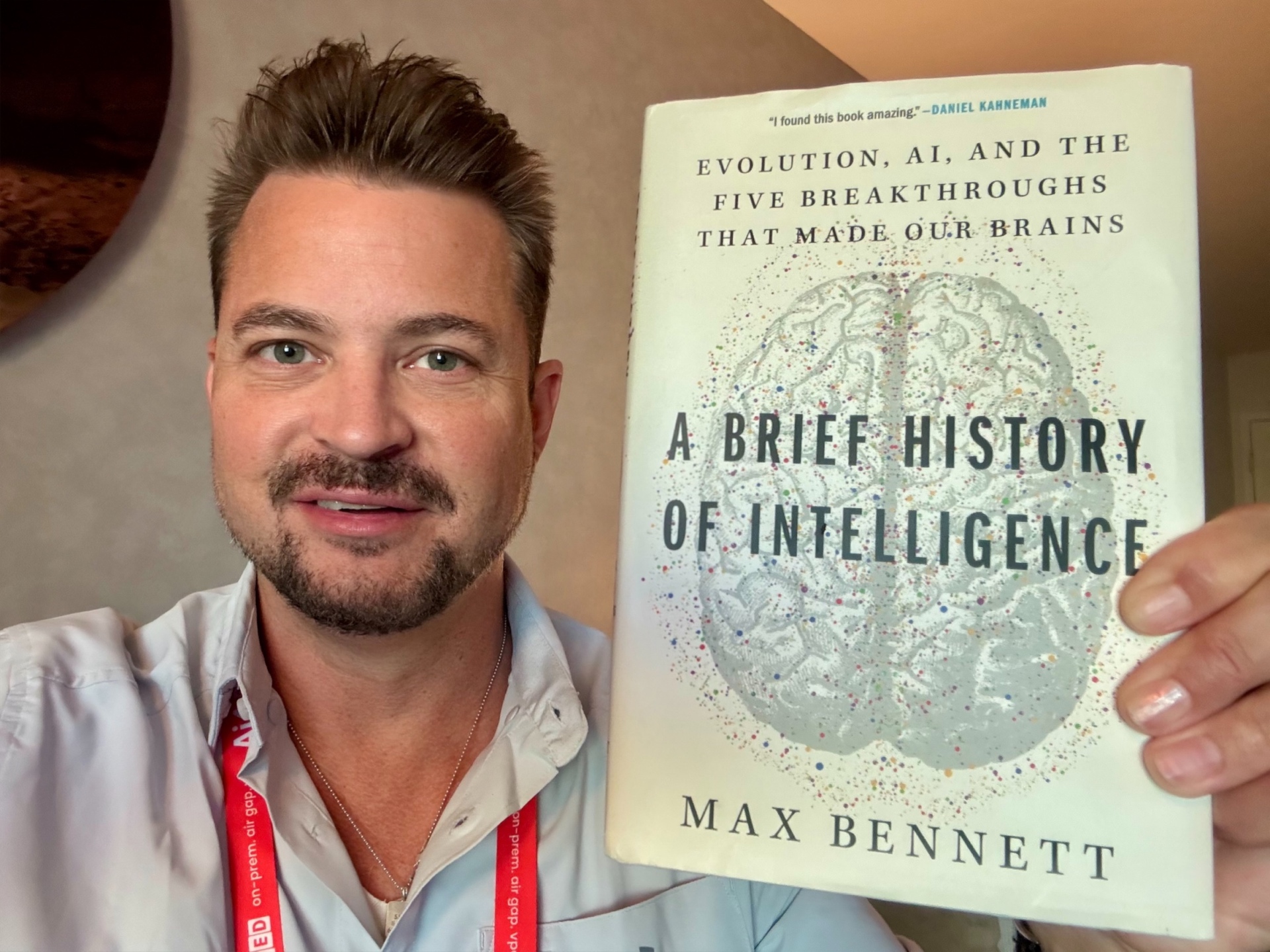
    Matt Mishak with A Brief History of Intelligence by Max Bennett

    A Brief History of Intelligence

    by Max Bennett

    For me, A Brief History of Intelligence wasn't just another science book — it was the most inspiring read of 2025. Max Bennett doesn't merely explain evolution and AI; he illuminates the arc of our cognitive journey from the simplest organisms to the complex minds we carry today and links that journey to the future of artificial intelligence in a way few authors have managed.

    Reading this book felt like a conversation with a brilliant guide who makes both neuroscience and AI feel vivid, urgent, and deeply meaningful. As someone immersed in law and technology, I found Bennett's insights not just informative but transformative — reminiscent of discussions at the Dartmouth Conference itself.

    Get the Book

    Praise from Visionaries

    "I found this book amazing. I read it through quickly because it was so interesting, then turned around and read much of it again."

    — Daniel Kahneman

    Nobel Laureate in Economics

    "I've been recommending A Brief History of Intelligence to everyone I know. A truly novel, beautifully crafted thesis on what intelligence is and how it has developed since the dawn of life itself."

    — Angela Duckworth

    Author of Grit

    Matt Mishak with The Singularity Is Nearer by Ray Kurzweil

    The Singularity Is Nearer

    by Ray Kurzweil

    Ray Kurzweil is not just a futurist — he's a prophet of exponential change. A student of Marvin Minsky, one of the founding minds behind the Dartmouth Conference, Kurzweil has been thinking about this moment longer than most institutions have been around.

    If you don't know Ray Kurzweil, you should. The Singularity Is Nearer makes one thing clear: the future isn't coming slowly — it's arriving all at once.

    Get the Book

    Praise from Visionaries

    "A fascinating exploration of our future, which raises the most profound philosophical questions."

    — Yuval Noah Harari

    Historian

    "Ray Kurzweil is the greatest oracle of our digital age. The Singularity Is Nearer is more than just a book—it's a survival guide for the technological renaissance we're about to experience."

    — Peter H. Diamandis, MD

    Futurist & Entrepreneur

    Matt Mishak with The Coming Wave by Mustafa Suleyman

    The Coming Wave

    by Mustafa Suleyman & Michael Bhaskar

    This isn't a hype book about shiny tools. It's a sober, urgent examination of what happens when powerful technologies scale faster than our institutions, laws, and social norms. Suleyman's core message is simple but uncomfortable: the future is not something that merely happens to us. It requires participation.

    The coming wave of AI and biotechnology will not be safely "managed" by a small group of technologists or regulators alone. Containment, governance, and alignment demand broad engagement across professions, industries, and communities. Sitting on the sidelines is not a neutral position. Non-participation is still a choice, and usually a costly one.

    What makes this book especially relevant for LegalTek.ai is its insistence that responsibility must scale with capability. Lawyers, operators, founders, and leaders cannot outsource judgment to systems or defer hard questions to later. The work is now: designing guardrails, rethinking institutions, and choosing to engage rather than react. Participation is the point.

    Get the Book

    Praise from Visionaries

    "A fascinating, well-written, and important book."

    — Yuval Noah Harari

    Historian

    "One of the most important books of the year. Suleyman is one of the few people who truly understands both the promise and peril of AI."

    — Eric Schmidt

    Former CEO of Google

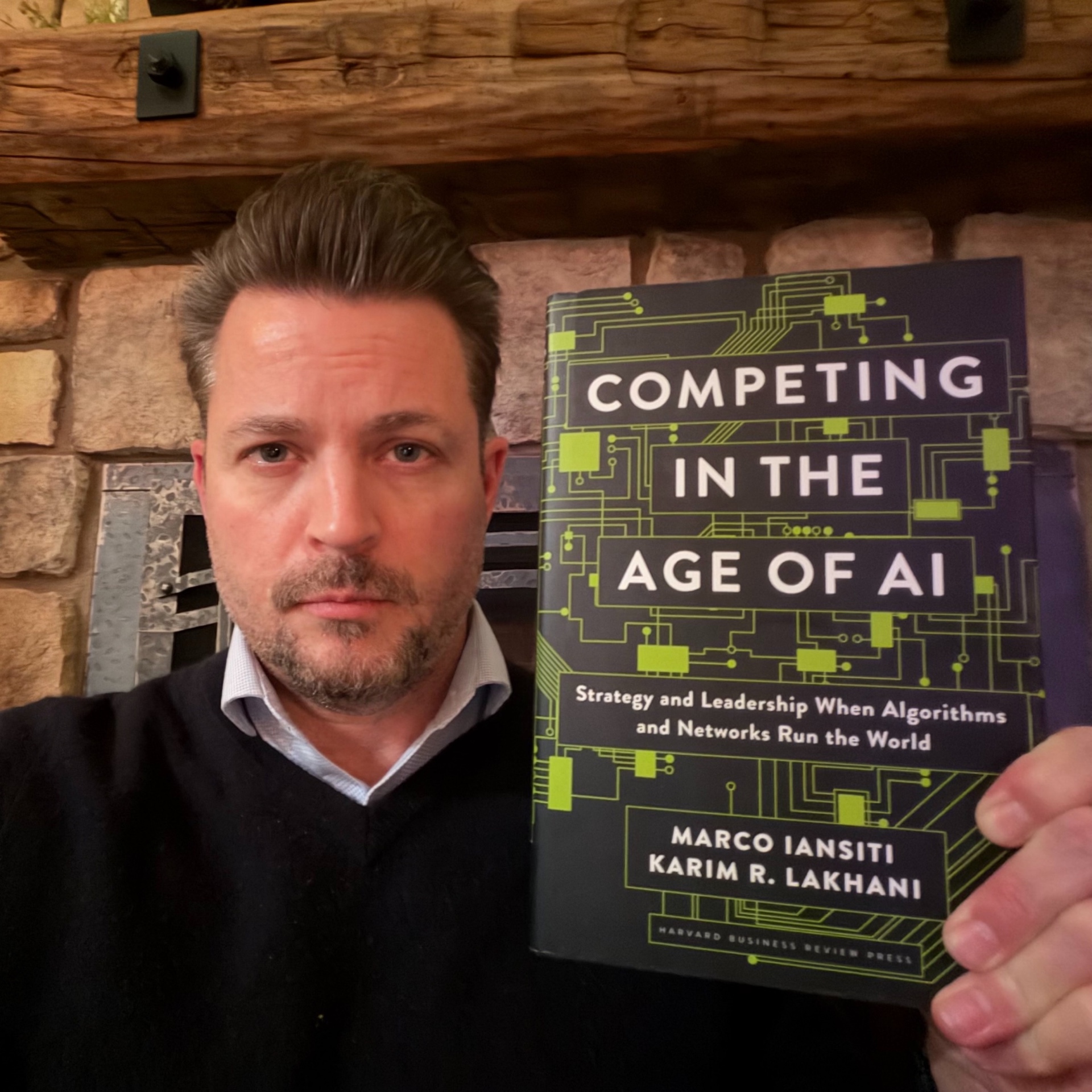
    Matt Mishak with Competing in the Age of AI by Marco Iansiti and Karim R. Lakhani

    Competing in the Age of AI

    by Marco Iansiti & Karim R. Lakhani

    Marco Iansiti and Karim R. Lakhani's Competing in the Age of AI is not a book about tools. It is a book about power, structure, and survival in an economy where software, data, and algorithms increasingly define competitive advantage. The central thesis is simple but unsettling: companies do not become AI-powered by sprinkling models on top of legacy processes. They must reorganize themselves around AI as a core operating logic.

    An AI-First organization treats data as infrastructure, not exhaust. Data lakes are not passive storage systems; they are living strategic assets continuously fed by operations, customers, and markets. The firms that win are those that design feedback loops where data improves models, models improve decisions, and decisions generate more data. This flywheel compounds faster than any traditional efficiency play.

    The book is particularly sharp on disruption. AI does not merely automate tasks; it collapses coordination costs. Entire layers of management, intermediaries, and professional gatekeepers become vulnerable when prediction and decision-making move closer to real time. This is why AI-driven firms tend to scale faster, operate with fewer humans per dollar of revenue, and exert outsized pressure on incumbents.

    Equally important is the authors' treatment of ethics and governance. AI systems embed values, whether intentionally or not. Bias, accountability, transparency, and trust are not compliance checkboxes; they are strategic concerns. Organizations that fail to govern AI responsibly risk regulatory backlash, reputational damage, and internal breakdowns of trust.

    Why this matters for LegalTek.ai: law, regulation, and professional services are precisely the kinds of industries ripe for AI-driven reconfiguration. Firms that treat AI as a bolt-on tool will fall behind. Firms that rethink workflows, data ownership, trust, and human judgment alongside AI will define the next era. If you are building, advising, regulating, or investing in the future of legal and professional services, this book belongs on your desk.

    Get the Book

    Praise from Visionaries

    "A compelling vision for how companies must transform to thrive in an AI-first world."

    — Satya Nadella

    CEO of Microsoft

    "Essential reading for any leader trying to understand how AI will reshape industries and competitive dynamics."

    — Reid Hoffman

    Co-founder of LinkedIn

    Matt Mishak with Nexus by Yuval Noah Harari

    Nexus

    by Yuval Noah Harari

    Nexus by Yuval Noah Harari is a foundational text for anyone trying to understand how information systems shape power, institutions, and human behavior—especially as we enter an AI-driven era. Harari reframes history not as a story of tools or even ideas, but as a story of networks: who controls information flows, how trust is manufactured, and how coordination scales.

    For LegalTek.ai, this book matters because law is itself an information network. Courts, statutes, contracts, evidence, compliance regimes, and now AI models are all nodes in a living system that governs behavior at scale. Harari makes one idea uncomfortably clear: technology does not just make systems faster—it reshapes who holds authority and how legitimacy is created.

    He explores how information networks drift toward concentration, how automated decision systems can harden power asymmetries, and how societies repeatedly mistake efficiency for wisdom. These themes map directly onto modern legal technology questions around AI-assisted decision-making, automated compliance, algorithmic evidence, and the risk of opaque systems replacing human judgment.

    Key insights: First, information systems always encode values—neutral tools do not exist. This reinforces the need for explicit governance, auditability, and human oversight in legal AI. Second, scale changes ethics—what works for a small network can become dangerous when automated and deployed broadly. Third, institutions lag technology—law historically reacts after power has already shifted.

    Nexus supports a core LegalTek.ai principle: AI in law must be human-centered, transparent, and institutionally aware. The future of legal technology is not about replacing lawyers—it is about redesigning legal systems so that intelligence, whether human or artificial, serves fairness, legitimacy, and trust at scale. Highly recommended for anyone building, regulating, or relying on AI-driven legal systems.

    Get the Book

    Praise from Visionaries

    "Harari has done it again. Nexus is a sweeping, thought-provoking exploration of how information has shaped human history—and how AI might reshape our future."

    — Bill Gates

    Co-founder of Microsoft

    "A masterful synthesis of history, technology, and human nature. Essential reading for understanding where we're headed."

    — Daniel Kahneman

    Nobel Laureate in Economics

    Matt Mishak with Supremacy by Parmy Olson

    Supremacy

    by Parmy Olson

    Parmy Olson's Supremacy is the book I wish every lawyer, regulator, and founder would read before making their next move in AI. Winner of the Financial Times and Schroders Business Book of the Year 2024, this is not another breathless hype piece about what AI might do someday. It is a meticulously reported account of what has already happened — and what it means for power, competition, and control.

    Olson, a Bloomberg columnist and author of We Are Anonymous, brings a journalist's rigor and a storyteller's instinct to the AI arms race between OpenAI and Google DeepMind. She traces how a small number of researchers, executives, and investors are making decisions that will reshape every industry on earth — including law. The central tension is not technical; it is human: ambition versus caution, open research versus commercial secrecy, safety versus speed.

    What makes this book essential for LegalTek.ai readers is its unflinching examination of concentration risk. The foundation models that power legal AI products are controlled by a handful of companies. Olson documents how acquisitions, talent wars, and compute monopolies are narrowing the field in ways that should concern anyone building on top of these platforms. If you are a legal technology founder or an enterprise buyer evaluating AI vendors, this book provides the geopolitical and corporate context you cannot afford to ignore.

    Supremacy reinforces a core LegalTek.ai principle: understanding AI is not optional for legal professionals. The race for AI supremacy is not happening in a vacuum — it is reshaping the infrastructure of knowledge work itself. Lawyers who understand the forces Olson describes will be better positioned to advise clients, evaluate tools, and navigate the regulatory landscape that is still being written.

    Get the Book

    Praise from Visionaries

    "Astonishing... Olson has exclusive access to a network of high-level sources and she uses it to devastating effect."

    — Financial Times

    Business Book of the Year 2024

    "A deeply reported, utterly gripping account of the most consequential technology race of our time."

    — Tony Fadell

    Creator of the iPod, Author of Build

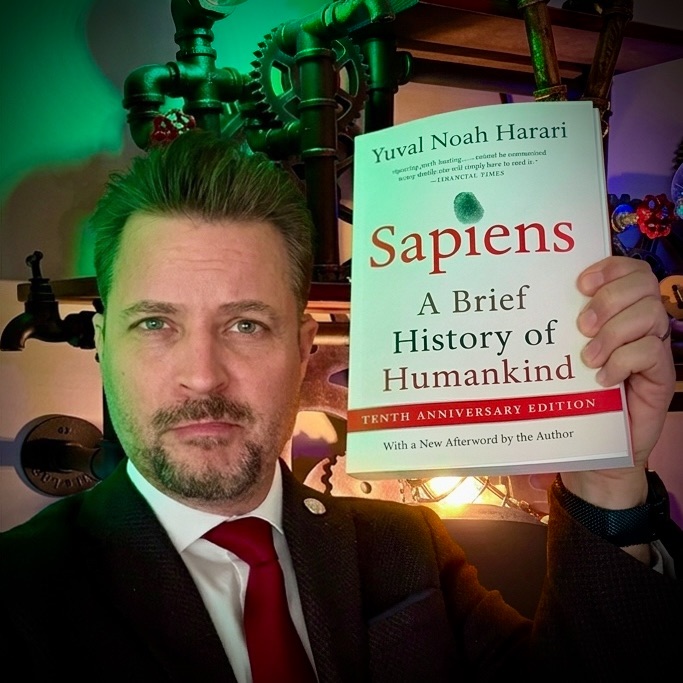
    Matt Mishak with Sapiens by Yuval Noah Harari

    Sapiens: A Brief History of Humankind

    by Yuval Noah Harari

    Sapiens is the book that rewired how I think about everything — law, technology, institutions, and human cooperation itself. Yuval Noah Harari doesn't just survey 70,000 years of human history; he dismantles the stories we tell ourselves about why civilization works. His central insight is deceptively simple: humans dominate the planet not because we are the smartest or strongest, but because we are the only species that can cooperate flexibly in large numbers — and we do it through shared fictions.

    For anyone in law or legal technology, this idea should hit like a thunderbolt. Laws, contracts, corporations, courts, constitutions — these are all shared fictions. They work because enough people believe in them. Harari forces you to see the scaffolding behind the systems we take for granted, and once you see it, you cannot unsee it.

    As AI begins to reshape how we create, interpret, and enforce these shared fictions, Sapiens becomes even more essential. If you want to understand where legal systems came from — and why they are so vulnerable to disruption — start here. This is the foundation that makes Nexus, The Coming Wave, and every other book on this list hit harder.

    Get the Book

    Praise from Visionaries

    "Interesting and provocative... It gives you a sense of how briefly we've been on this earth."

    — Barack Obama

    44th President of the United States

    "I would recommend this book to anyone interested in a fun, engaging look at early human history... You'll have a hard time putting it down."

    — Bill Gates

    Co-founder of Microsoft

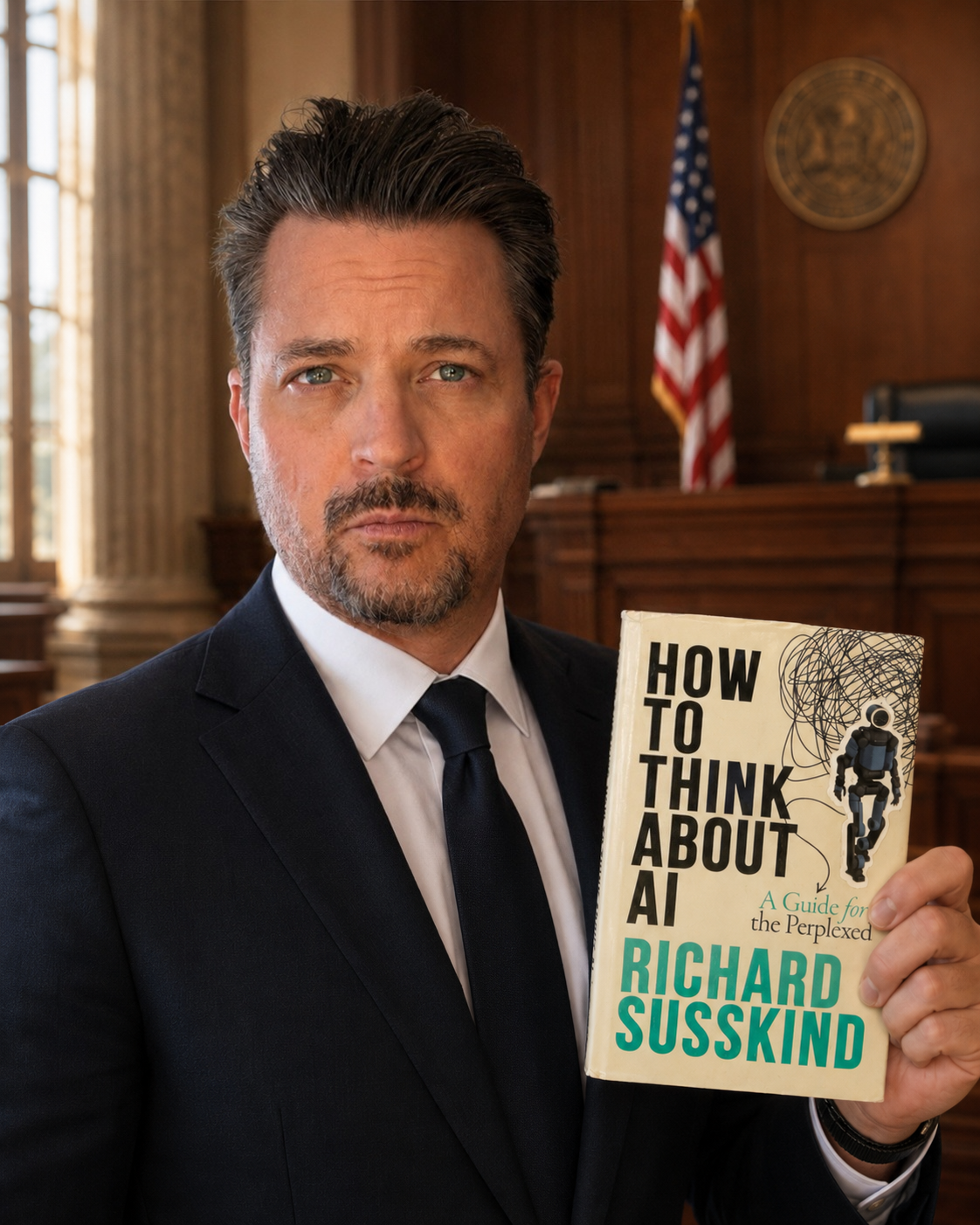
    Matt Mishak with How to Think About AI by Richard Susskind

    How to Think About AI: A Guide for the Perplexed

    by Richard Susskind

    Richard Susskind has spent four decades thinking about the future of professional work, and How to Think About AI is the distilled vocabulary every lawyer needs for the decade ahead. This is not a tactical book about prompts or tools — it is a structured way of thinking about what AI is, what it is becoming, and what it implies for the institutions that depend on human judgment.

    The chapter that most repays a careful read is Susskind's framing of the four long-run scenarios for the human–AI relationship: AI takeover, merger, peaceful coexistence, and shut-off. He treats each seriously, not as prediction but as the realistic shape of the possibility space. His argument is that any serious conversation about AI policy or professional practice has to hold all four open at once — and most public debate collapses prematurely into one.

    For Ohio attorneys orienting around the COUNSEL Framework, this book pairs naturally with ABA Formal Opinion 512 and the Ohio Supreme Court's AI Task Force Report. The opinions tell you what your duties are. Susskind helps you decide what you believe about where the technology is headed — and that belief shapes every governance and oversight choice that follows.

    Get the Book

    Praise from Visionaries

    "Susskind is the world's leading authority on the future of legal services and one of the most lucid writers on AI for non-specialists."

    — The Times (London)

    Review

    "An indispensable guide for anyone who wants to think clearly about what AI means for their work, their profession, and their life."

    — Daniel Susskind

    Author of A World Without Work