Legalweek 2026 State of the Industry Keynote
    LegalWeek 2026
    State of the Industry
    Keynote Recap

    The Reckoning: Why Yesterday's Playbook Won't Guarantee Tomorrow's Success

    2026 State of the Industry Keynote — Final Day, March 12, 2026

    March 12, 2026 30 min read Matt Mishak, J.D.
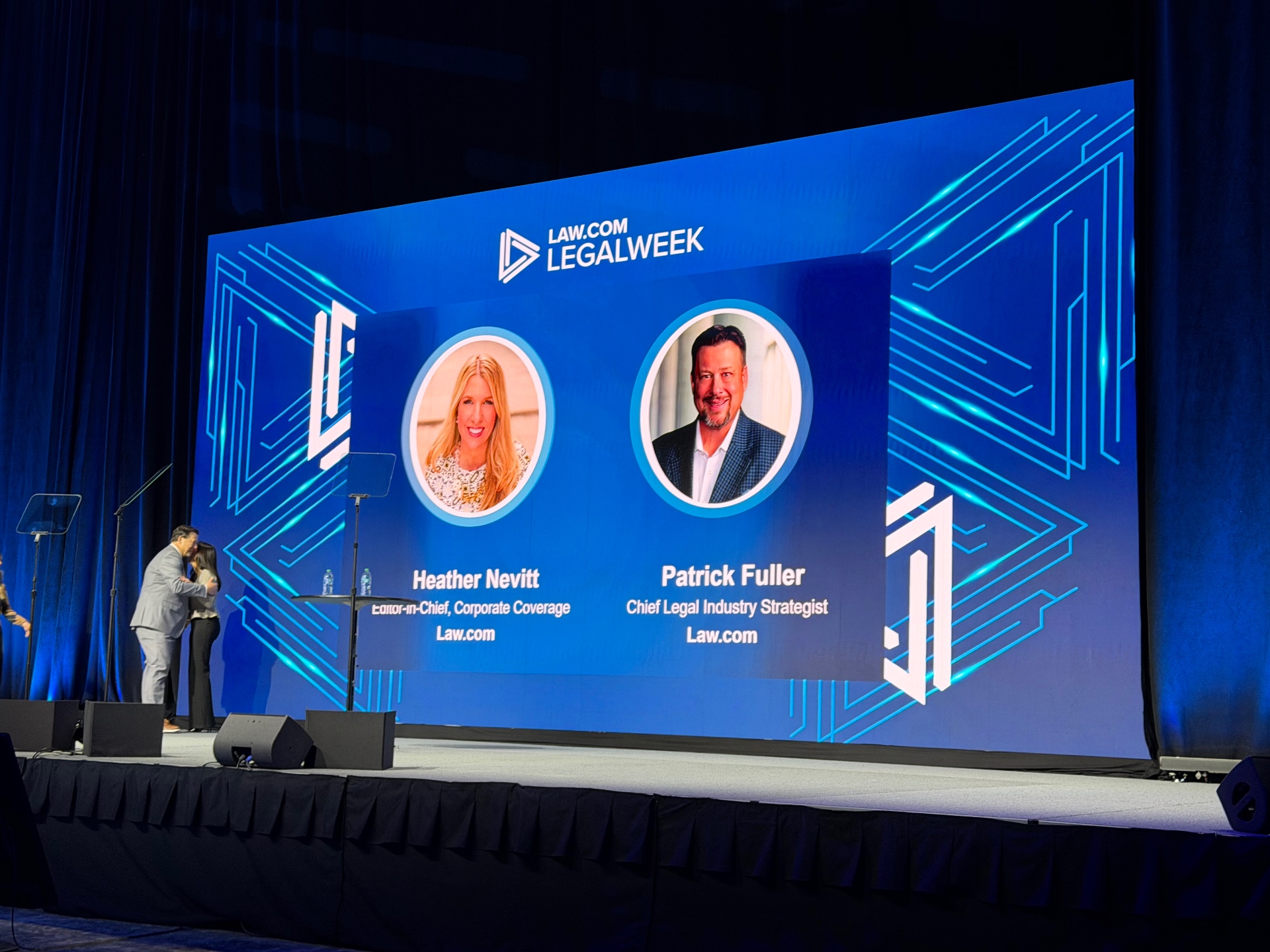
    Patrick Fuller and Heather Nevitt, Legalweek 2026 Keynote
    Patrick Fuller, Chief Legal Industry Strategist & Heather Nevitt, Editor-in-Chief, Corporate Coverage — Law.com
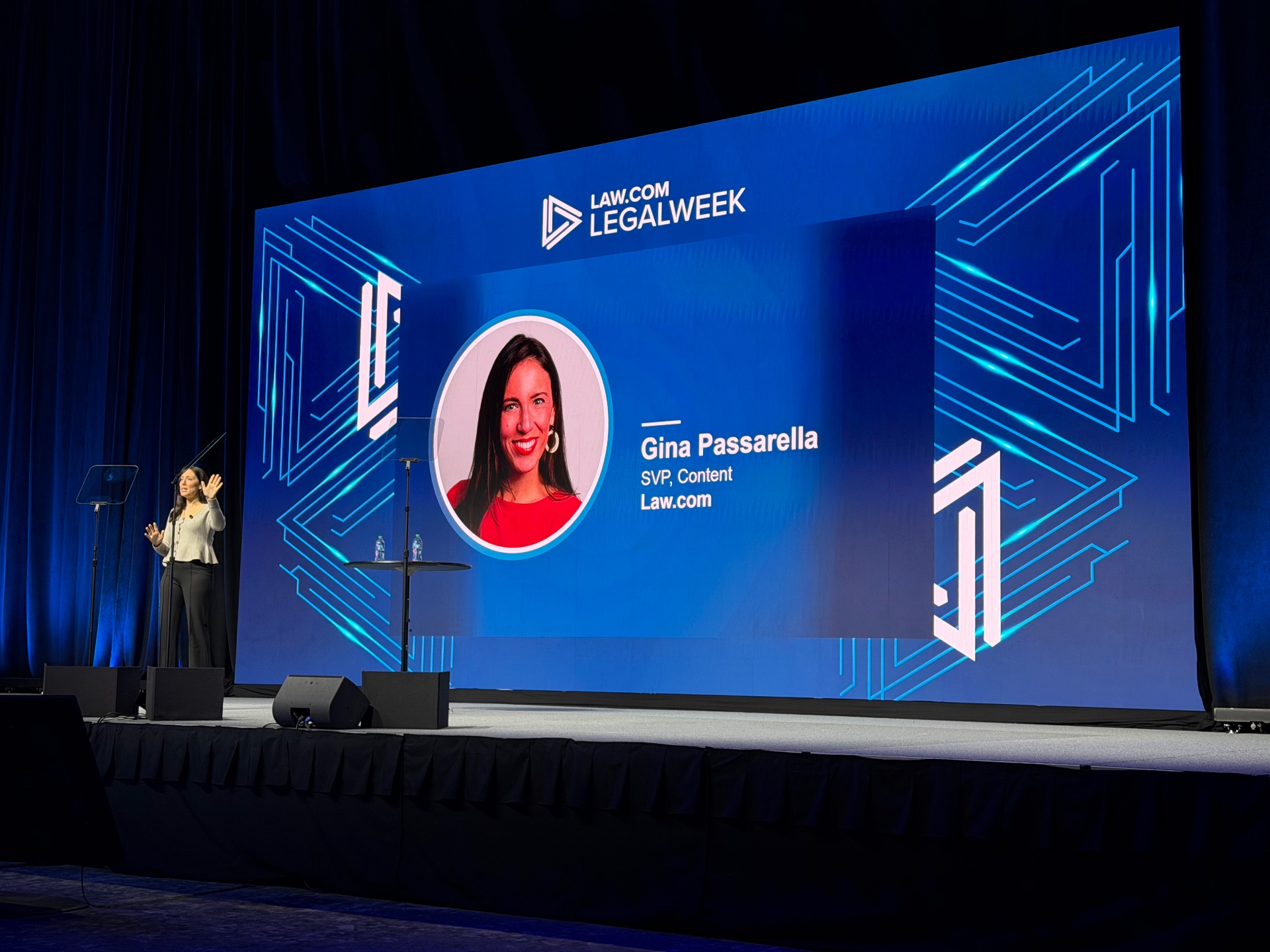
    Gina Passarella, SVP Content, Law.com
    Gina Passarella, SVP Content, Law.com — introducing the keynote

    The Impossible Triangle at the Heart of Big Law

    Legalweek 2026 closed with a final-day keynote that didn't sugarcoat anything. Titled The Reckoning: Why Yesterday's Playbook Won't Guarantee Tomorrow's Success, the session delivered by Patrick Fuller, Law.com's Chief Legal Industry Strategist, and Heather Nevitt, Editor-in-Chief of Corporate Coverage, was equal parts forensic data analysis and strategic wake-up call. It was the kind of presentation that makes you quietly reconsider your entire firm's five-year plan before you've finished your morning coffee.

    The visual anchor for the entire keynote? A Penrose triangle—the famous "impossible object" created by Lionel Penrose and his son Roger in 1958. Each corner appears structurally sound. The geometry looks correct. But the whole shape cannot actually exist in three-dimensional space. Fuller and Nevitt used this as the throughline for their argument: the legal industry's key metrics—rate increases, rising profits per equity partner, growing headcount—each look solid in isolation. But follow the geometry all the way around, and the structure is an illusion.

    Two Companies, One Lesson: The Power of Self-Disruption

    Before a single data slide appeared, Fuller and Nevitt took the audience back to the late 1990s and early 2000s with two stories that framed the entire discussion: Apple and Netflix.

    Apple: Killing the iPod on Purpose

    Apple came into the 2000s bruised. Microsoft had dominated the prior decade, and Apple faced the genuine prospect of becoming, as Fuller put it, "the Kodak of home computers." The iPod changed everything. By 2006, it represented a staggering 40% of Apple's total revenue, peaking at 54.8 million units sold in a single year.

    But in 2004, while iPod sales were still surging, Steve Jobs quietly launched Project Purple—a secret internal initiative to build a touchscreen device that could make calls, store music, play movies, and completely upend the software delivery model. If it worked, it would make the iPod—Apple's lifeline—obsolete.

    It worked. The iPhone launched in 2007. iPod's share of Apple revenue began a terminal decline and by 2013 was essentially a rounding error. Apple didn't mourn the iPod. They had already moved on—because they were the ones who decided to move on.
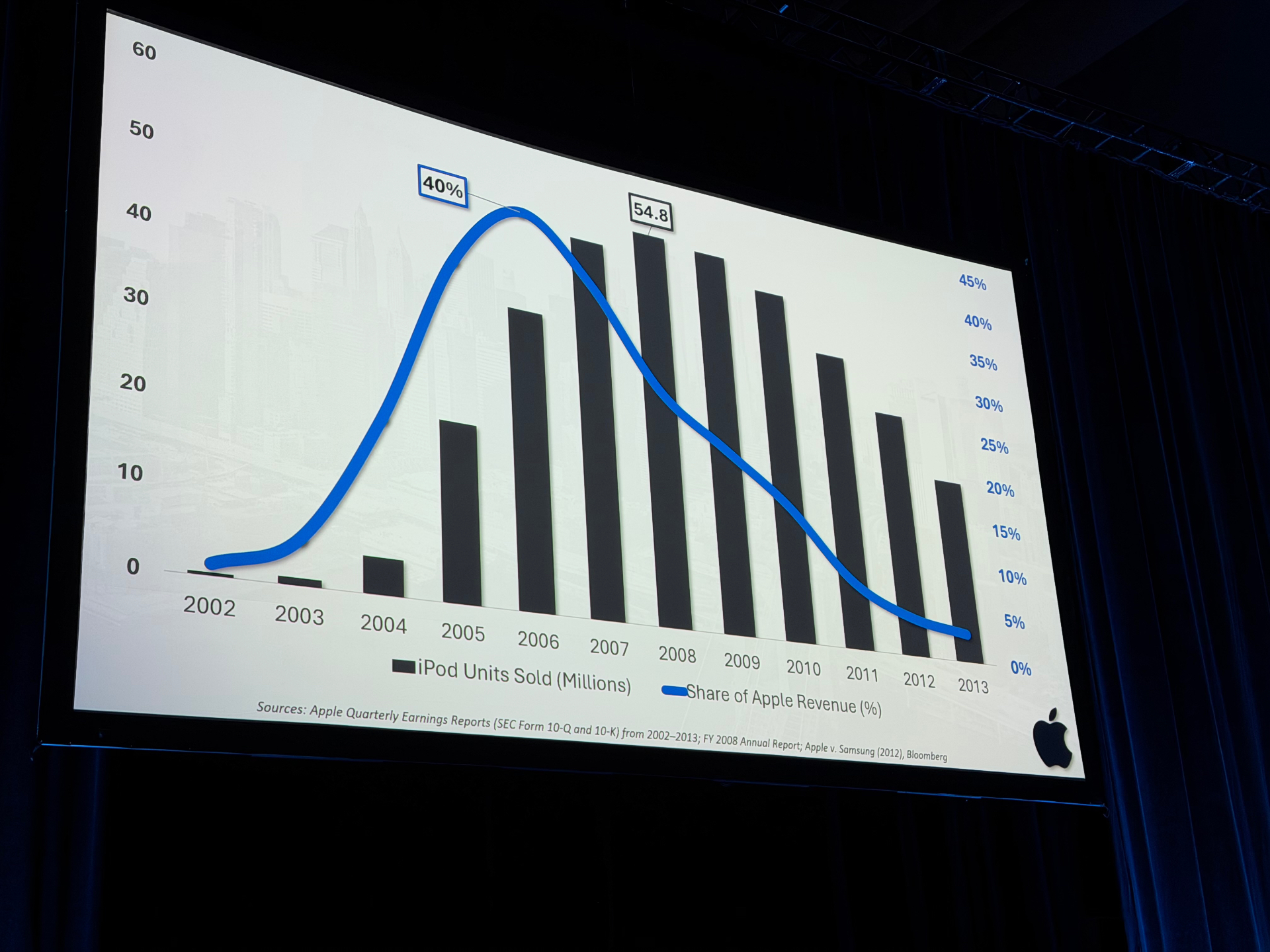
    iPod Units Sold vs. Share of Apple Revenue, 2002-2013
    iPod units sold peaked at 54.8M in 2008 — but Apple had already launched the iPhone. Source: Apple SEC filings

    Netflix: Cannibalizing the Red Envelope

    Netflix was the mirror image. While Blockbuster commanded 9,000 physical stores, Netflix had a website and a warehouse. But in 2004, with DVD-by-mail revenue still growing, Reed Hastings began building streaming infrastructure for a market that barely existed—broadband penetration was limited and data caps were common.

    In 2007, Netflix launched "Watch Instantly" as a streaming add-on. By 2010, it was a standalone service. Blockbuster's store count, which had been quietly eroding, collapsed. Nine thousand stores became essentially zero within a few years, while Netflix streaming revenue went nearly vertical.
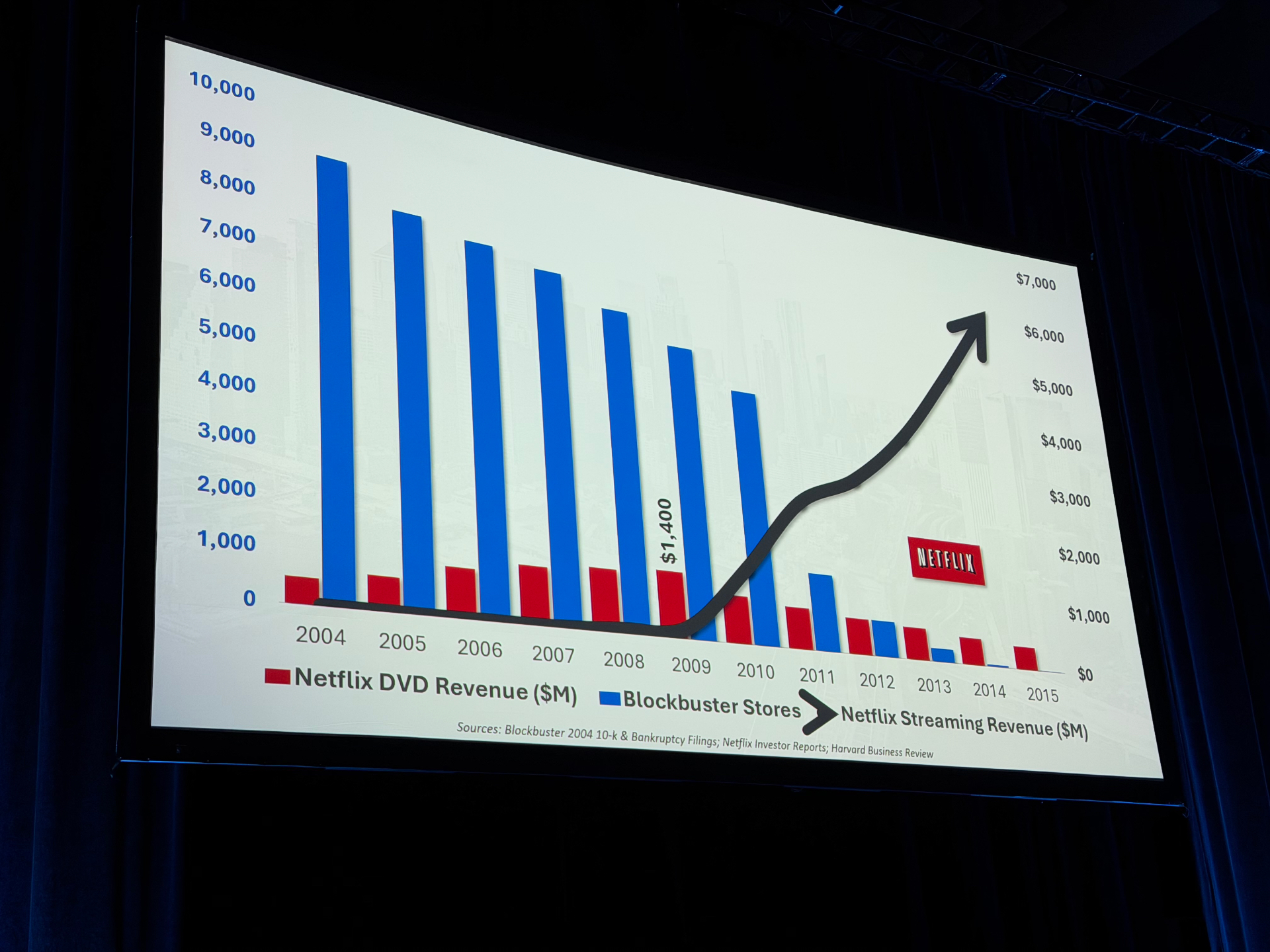
    Blockbuster Stores vs. Netflix Streaming Revenue, 2004-2015
    Blockbuster collapsed from 9,000 stores while Netflix streaming revenue went vertical. Sources: Blockbuster 10-K, Netflix Investor Reports
    The keynote's critical insight: neither Apple nor Netflix waited for their existing businesses to show signs of failure before building the replacement. They cannibalized themselves while the business was still working. They made the uncomfortable bet before they had to. That is the challenge now sitting on every managing partner's desk.

    The Am Law 200: A Cautionary Census

    Fuller brought the disruption story directly to the legal industry with a striking piece of data: of the 200 firms on the inaugural Am Law 200 ranking published in 1999, 74 firms—37% of the original list—no longer exist as ranked entities. They have merged, dissolved, or collapsed.

    These weren't just lower-tier firms. The casualties included one firm from the top five, four from the top 25, and 30 from the Am Law 100. Collectively, those 74 departed firms represented 27% of the total revenue from the original 1999 ranking.

    Am Law 200 Attrition — 1999 to 2026

    74
    Firms Gone
    37%
    Of Original List
    30
    From Am Law 100
    27%
    Revenue Lost
    "Status is not a strategy, and presence is not protection." — Patrick Fuller

    From Binary Choices to Ternary Strategy

    One of the keynote's most compelling frameworks was the concept of ternary strategy—a rejection of the binary "build vs. buy" thinking that has dominated legal industry conversations for years. The real strategic question, Fuller argued, isn't how you respond to disruption. It's which disruption you choose to lead. Firms face three paths: disrupt the market, self-disrupt, or be disrupted.

    The In-House Perspective: Composure Under Fire

    Nevitt's portion of the keynote shifted focus to what's happening inside legal departments. Her central observation: after half a decade of rolling crises—pandemic, regulatory whiplash, geopolitical instability, tariff uncertainty—general counsel are no longer in reactive mode. They have structurally absorbed the chaos.

    The surprise, she noted, isn't the strain. It's the composure. Legal leaders have accepted that volatility is not episodic—it is structural. One global GC she quoted put it this way: the constant pace has become the norm.

    A Redefinition of Purpose

    Nevitt framed the in-house transformation around three pivots: from reactive to proactive, from bespoke to scalable, and from siloed to integrated. Legal departments are no longer artisanal shops custom-crafting every response. They're building playbooks, templates, and automated workflows so human judgment can be reserved for the highest-value decisions.

    She was emphatic that the differentiator isn't the smartest AI model or the fastest deployment. It's two irreplaceable human capacities: leadership through change and ethical judgment—the ability to ask who benefits, what risk is created, and what trade-offs are acceptable. A Lexology Pro survey she cited found that two-thirds of in-house counsel don't feel fully equipped in either area—a gap that is simultaneously a massive opportunity.

    AI in the Department: Momentum with the Brake Hovering

    On AI adoption, the data paints a picture of enthusiastic but cautious deployment. Ninety percent of in-house counsel report increased efficiency when using AI tools. But the number one barrier to deeper adoption remains unclear ROI—teams can feel the speed gains but struggle to quantify them in the language of finance.

    The Rate Illusion: Growth That Isn't

    Fuller returned with a deep dive into billing rate data from FY 2020–2024 across the Am Law segments, and this is where the keynote's Penrose triangle metaphor really crystallized.

    The headline looks triumphant: by 2024, 100% of Am Law 100 firms reported raising rates by 3% or more. But the further down-market you look, the more inconsistent the picture becomes. Am Law 101–200 firms raised rates unevenly. Unranked firms struggled to clear basic inflationary thresholds even in a year when costs were rising across the board.
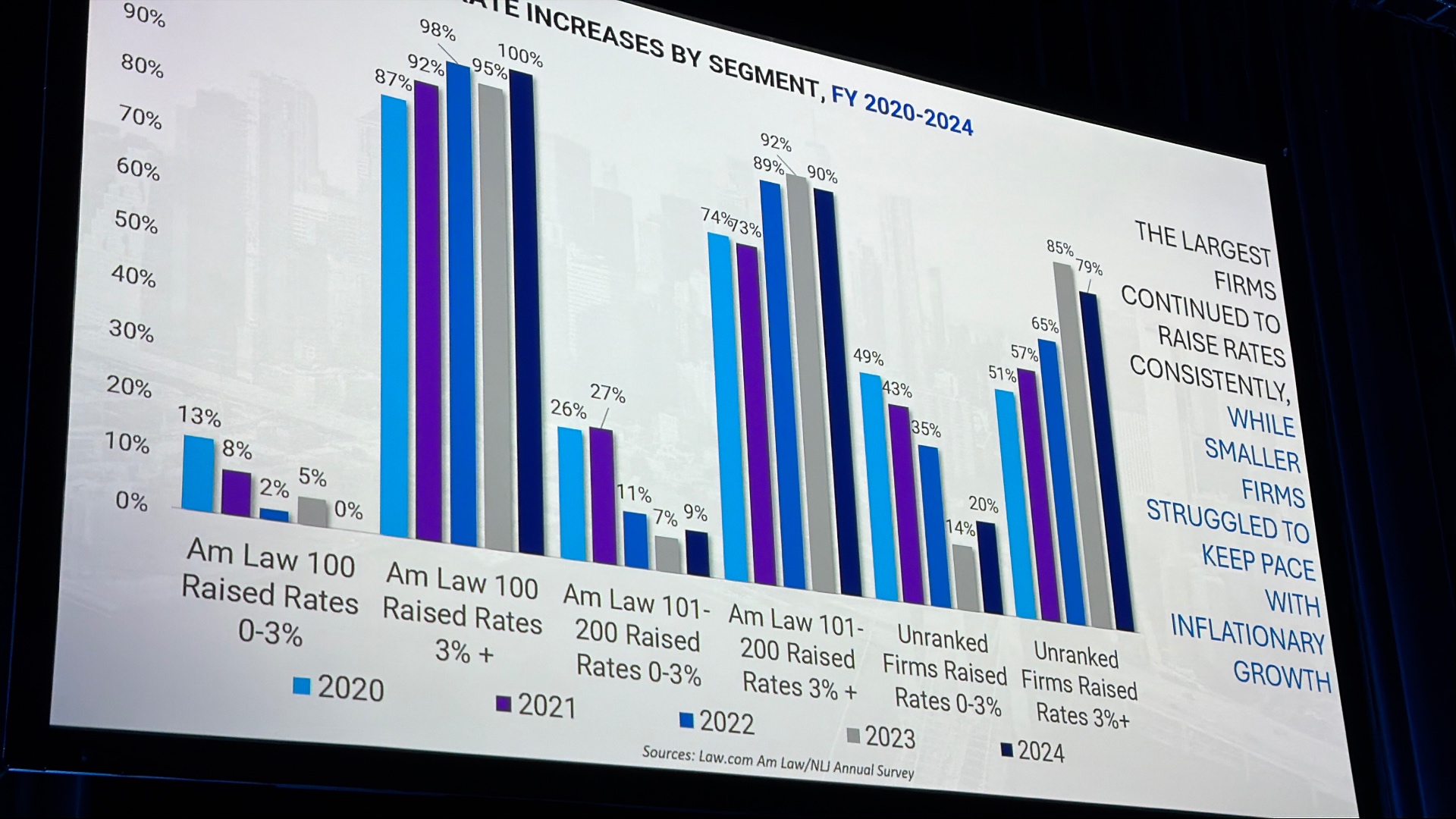
    Reported Rate Increases by Segment, FY 2020-2024
    Rate increases by Am Law segment — the largest firms raised consistently while smaller firms struggled to keep pace. Source: Law.com Am Law/NLJ Annual Survey
    Fuller called this a "behavioral problem masquerading as a pricing problem." Mid-market and unranked firms aren't under-pricing because their value isn't there. They're under-pricing because loss aversion—the fear of losing a client—feels more immediate than the slow bleed of profit erosion.

    Am Law 50: A Different Planet

    The Am Law 50 FY 2024 breakdowns told a dramatic story. Over 31% of Am Law 50 firms raised rates by 10% or more, and another 56% raised them between 7–9%. These firms didn't ask for permission. They operated on a simple premise: clients expect excellence and will pay for it.
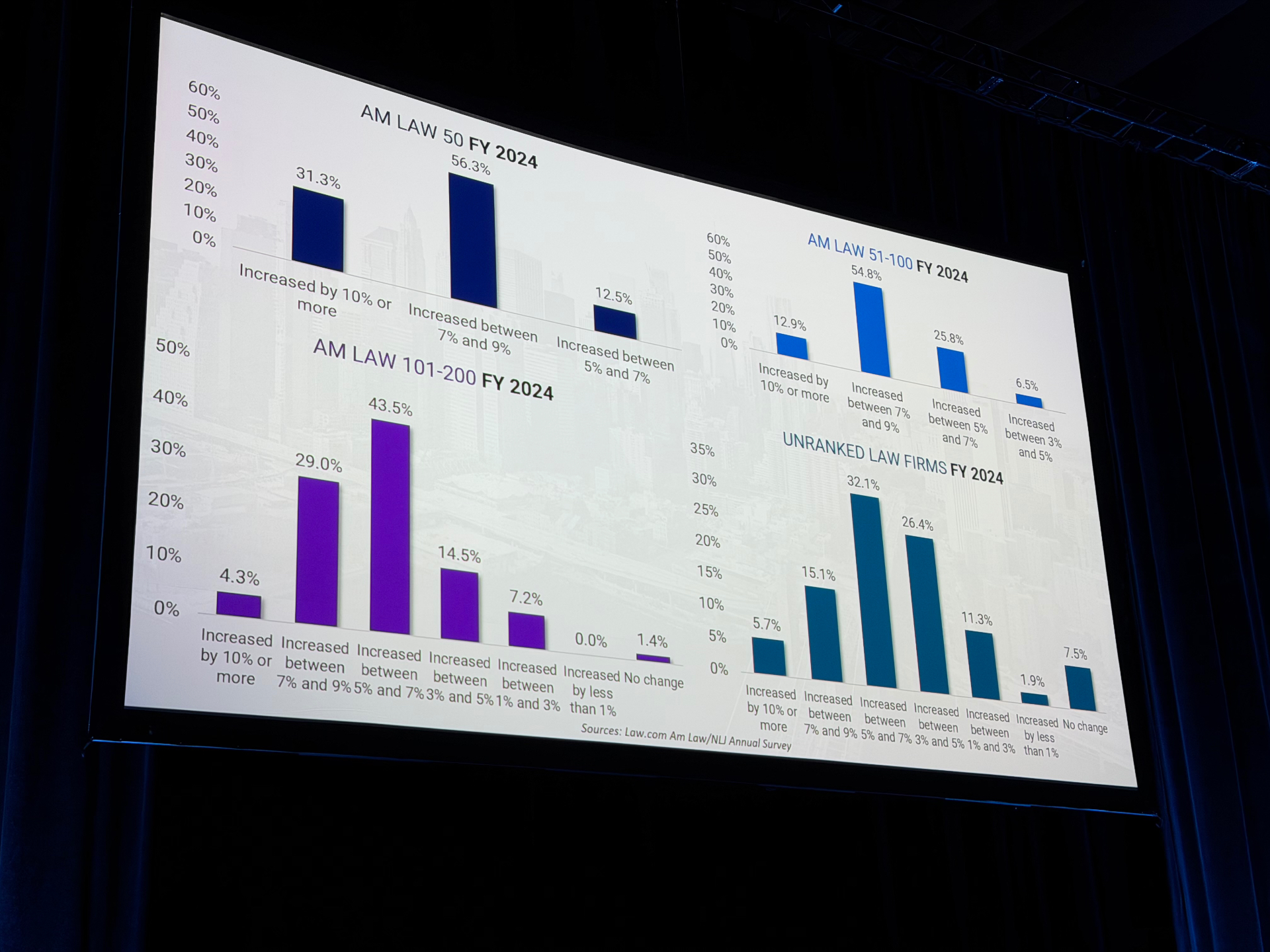
    Am Law Rate Increases by Segment, FY 2024
    Am Law 50 firms raised rates aggressively — 31.3% increased by 10%+ — while unranked firms showed dramatically different pricing behavior. Source: Law.com Am Law/NLJ Annual Survey

    Adjust for Inflation, and the Geometry Breaks

    The most sobering slide of the keynote came when Fuller applied the GDP implicit price deflator to five-year compound annual growth rates. This is the microscope that reveals whether nominal growth is real growth or just a hamster wheel.

    MetricReality Check
    Revenue per LawyerAm Law 50 barely positive at 0.7% in real terms. Everyone else is flat or negative. More lawyers plus flat demand = math doesn't work.
    Profits per Equity PartnerAm Law 50 growing at 4.4% inflation-adjusted — but engineered through equity tier compression. FY 2024: first year non-equity partners outnumbered equity partners in Am Law 100.
    Profits per LawyerOnly the Am Law 50 is positive after inflation. Everyone else is losing ground in real dollars.
    "Several firms are financing the appearance of prosperity while profitability, measured in real inflation-adjusted dollars per lawyer, is quietly eroding. That's not a headline from our editorial team. That's a warning from our consulting arm." — Patrick Fuller

    Talent Wars and the Consolidation Tsunami

    Nevitt presented data on lateral partner hiring that underscored the consolidation theme. Am Law 200 lateral partner hires rose from 3,349 in FY 2023 to 4,152 in FY 2025—a 20% increase in two years, which, in a profession that moves slowly, qualifies as seismic.

    But where are those laterals going? The Am Law 50 captured 42% of lateral hires in FY 2023. By FY 2025, that share had climbed to 46%. The largest firms aren't just raising rates more aggressively—they're winning the talent market more aggressively too.
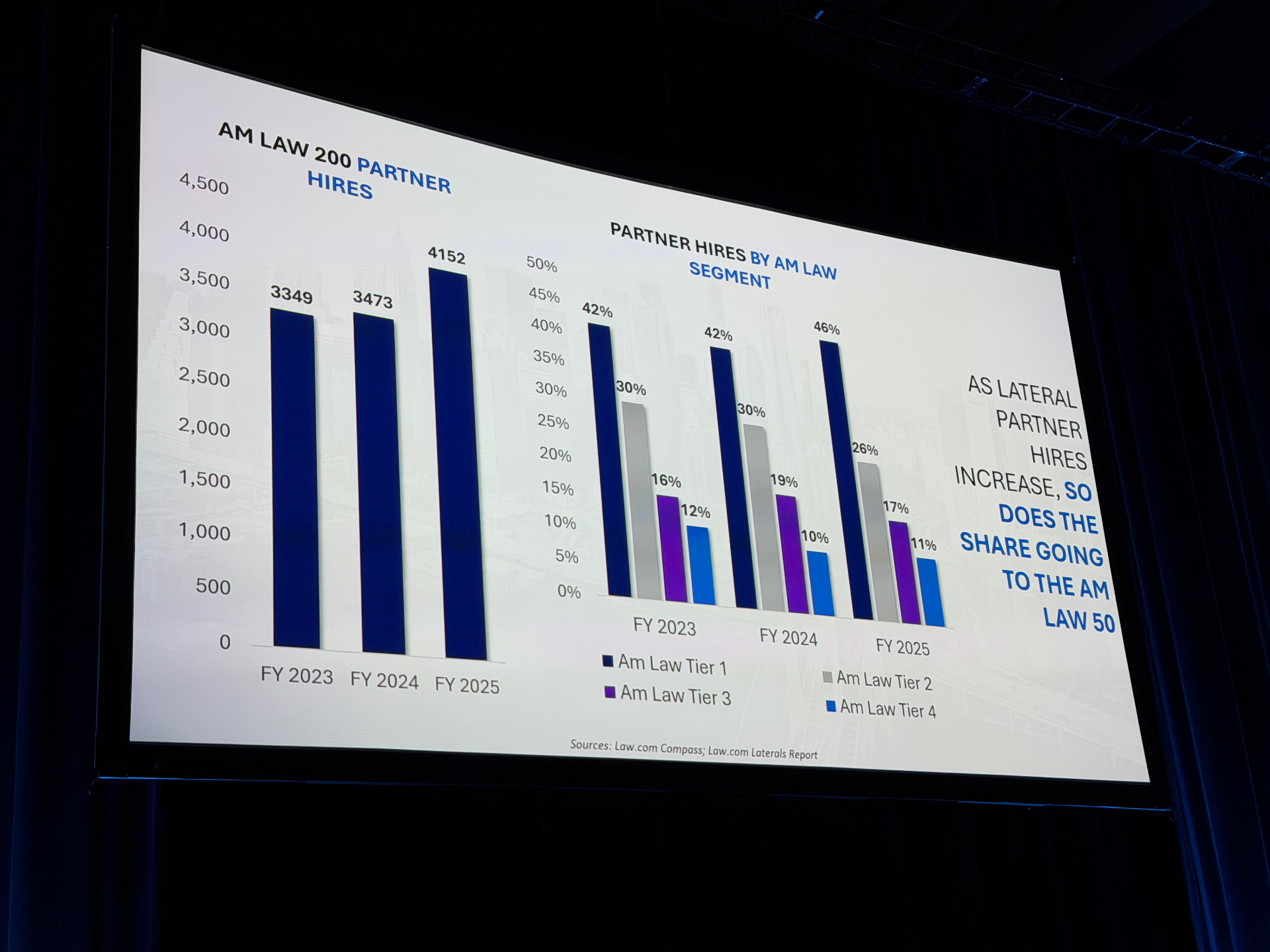
    Am Law 200 Partner Hires and Distribution by Tier
    Lateral partner hires surged 20% from 2023–2025, with Am Law 50 capturing an ever-larger share. Source: Law.com Compass; Law.com Laterals Report

    Since 2020, more than 300 mergers involving over 50,000 lawyers have been executed, announced, or are pending. 2025 was the most active year in the range, and 2026 was already tracking significant activity only three months in.
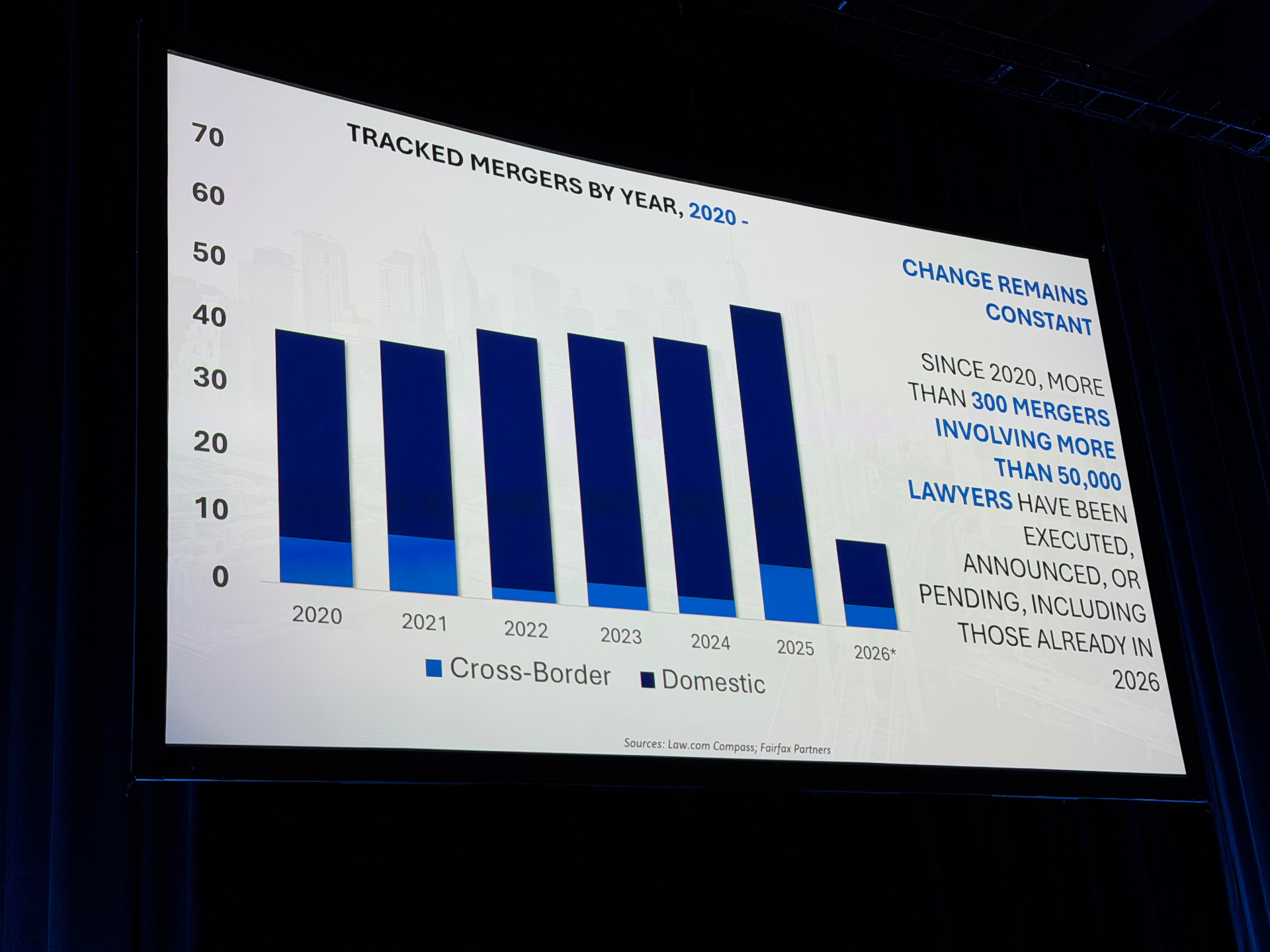
    Tracked Mergers by Year, 2020-2026
    300+ mergers involving 50,000+ lawyers since 2020 — change remains constant. Source: Law.com Compass; Fairfax Partners

    The AI Conviction–Action Gap

    Fuller introduced findings from a joint survey with Wicker Park, the leading client feedback consultancy, covering over 170 law firms. The results revealed a striking gap between belief and behavior.

    On a 1–7 scale, firms rated AI's significance for competitive advantage over the next five years at a median of 6. Near consensus that AI will be a primary differentiator. And yet: only 46% of firms expect AI to produce net revenue growth. Twenty-four percent expect net revenue losses. Twenty-nine percent expect no change at all.

    46%
    Expect Net Revenue Growth
    24%
    Expect Net Revenue Losses
    29%
    Expect No Change

    What Clients Actually Want

    Seventy-five percent of law firms believe their clients are demanding faster, cheaper, and smarter—not one or the other, but all three simultaneously. Yet only 49% believe clients want proactive AI-driven insights and horizon scanning. Half of the profession is still primarily selling reactive legal services—exactly the zone where firms self-inflict wounds through excessive discounts and commoditization.

    Nevitt distilled what corporate counsel want from outside partners into five priorities: efficiency through technology, transparency on AI use, outcome-oriented pricing, domain fluency and integration, and risk-aware innovation with guardrails. She cited Salesforce CLO Sebastian Niles' statement from earlier in the week that the era of AI pilots is over and that efficiency gains shared with clients are no longer optional.

    "AI is not going to replace lawyers. But lawyers who build relationships and incorporate AI will absolutely replace lawyers who don't." — Heather Nevitt

    Illusory Superiority and the GPS Without Roads

    Perhaps the most uncomfortable data from the Wicker Park survey involved firm self-assessment. Firms rated their overall AI adoption progress at 4 out of 7—encouraging on its face. But when asked specifically about their lawyers' actual preparedness to use AI tools, that number dropped to 3.9. Same firms. Same survey. Different questions. A gap that reveals exactly where belief ends and reality begins.

    Seventy-five percent of firms are offering AI training and upskilling. Sounds like progress—until you learn that 66% said they are not hiring the professional specialists needed to actually sustain that adoption.

    "You can train people to peel an orange, but if you painted it blue and told everyone it's something else entirely, training alone isn't going to solve the problem." — Patrick Fuller

    Firms are handing people a GPS and a map without building the roads. That's not an AI strategy. That's an AI announcement.

    The Fee–Compensation–Technology Triangle: Still Impossible

    Only 19% of firms have modified their fee engagements in any way to align with increased AI adoption. Seventy-two percent have no plans—or simply don't know whether they'll change attorney compensation structures to account for AI use.

    Fuller mapped this back to the Penrose triangle: for technology-driven change to be sustainable, three things must align—fee engagements, behavioral incentives, and the technology itself. Advance any one without the others, and you've built the illusion of a triangle, not a real one.

    "If your compensation plan is in conflict with your strategic plan, then your compensation plan is your strategic plan." — Tim Parker, via Patrick Fuller

    The Productivity Paradox: Have the Patience to Let It Grow

    The keynote's closing arc invoked economist Erik Brynjolfsson's "productivity paradox"—the well-documented lag between the arrival of transformative technology and its measurable impact on output. You invest. You wait. You question the investment. Your partners question it. And then, if you've built the right infrastructure, the gains arrive.

    Apple and Netflix understood their own productivity paradoxes were coming. They planned for them. They didn't let short-term performance anxiety drive them back to the old model, even when shareholders and analysts were skeptical.

    The legal industry is in the midst of its own productivity paradox right now. The seeds are in the ground. The question, as Nevitt put it, is whether firms have the patience and the strategic conviction to wait for them to grow.

    Key Takeaways

    Status Is Not a Strategy

    37% of the original Am Law 200 are gone. They had status, history, and brand equity. None of it was a substitute for strategic adaptation.

    Self-Disruption Is the Only Sustainable Advantage

    Apple killed the iPod. Netflix killed the red envelope. Both did it while the business was still working.

    The Penrose Triangle Is the Perfect Metaphor

    Rate increases are up. PEP is up. Headcount is growing. But inflation-adjusted profits per lawyer tell a different story.

    The Middle Market Is Under-Pricing Out of Fear

    Loss aversion is contagious. Clients are more accepting of rate increases than lawyers assume.

    In-House Has Fundamentally Changed

    General counsel are no longer in crisis mode — they've absorbed the chaos structurally. They want proactive partners.

    AI Conviction Without Structural Realignment Is Theater

    Only 19% have adjusted fees and 72% haven't touched compensation. Without aligning pricing, incentives, and technology, it's an illusion.

    The Question Isn't What You're Changing — It's What You're Willing to Redesign

    Not adopted. Redesigned. That's the difference between bolting a new tool onto old workflows and building a genuinely new blueprint.

    The closing question Fuller and Nevitt left with the room: What are you willing to redesign?

    Save the Date: Legalweek 2027 — March 1–3, 2027 — North Javits Convention Center, New York City

    AI Disclosure: This article was human-reviewed but may contain AI-generated elements. Readers should conduct their own research and remain skeptical of potential factual errors.
    Matt Mishak

    Matthew A. Mishak, J.D.

    Attorney • Founder, LegalTek.ai & SilverTung AI • MIT Sloan
    Recommended Reads

    Essential Reading for the AI Era

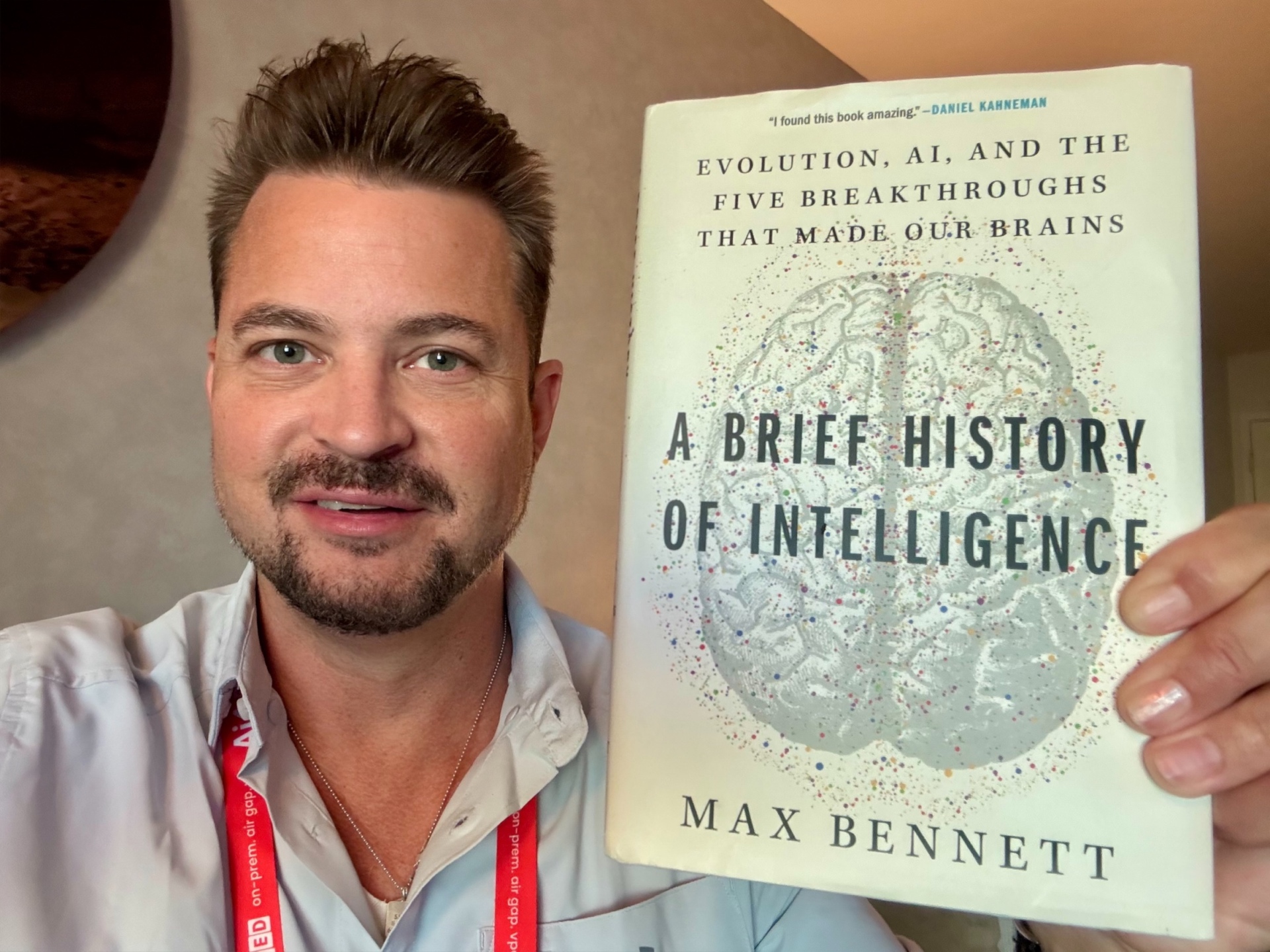
    Matt Mishak with A Brief History of Intelligence by Max Bennett

    A Brief History of Intelligence

    by Max Bennett

    For me, A Brief History of Intelligence wasn't just another science book — it was the most inspiring read of 2025. Max Bennett doesn't merely explain evolution and AI; he illuminates the arc of our cognitive journey from the simplest organisms to the complex minds we carry today and links that journey to the future of artificial intelligence in a way few authors have managed.

    Reading this book felt like a conversation with a brilliant guide who makes both neuroscience and AI feel vivid, urgent, and deeply meaningful. As someone immersed in law and technology, I found Bennett's insights not just informative but transformative — reminiscent of discussions at the Dartmouth Conference itself.

    Get the Book

    Praise from Visionaries

    "I found this book amazing. I read it through quickly because it was so interesting, then turned around and read much of it again."

    — Daniel Kahneman

    Nobel Laureate in Economics

    "I've been recommending A Brief History of Intelligence to everyone I know. A truly novel, beautifully crafted thesis on what intelligence is and how it has developed since the dawn of life itself."

    — Angela Duckworth

    Author of Grit

    Matt Mishak with The Singularity Is Nearer by Ray Kurzweil

    The Singularity Is Nearer

    by Ray Kurzweil

    Ray Kurzweil is not just a futurist — he's a prophet of exponential change. A student of Marvin Minsky, one of the founding minds behind the Dartmouth Conference, Kurzweil has been thinking about this moment longer than most institutions have been around.

    If you don't know Ray Kurzweil, you should. The Singularity Is Nearer makes one thing clear: the future isn't coming slowly — it's arriving all at once.

    Get the Book

    Praise from Visionaries

    "A fascinating exploration of our future, which raises the most profound philosophical questions."

    — Yuval Noah Harari

    Historian

    "Ray Kurzweil is the greatest oracle of our digital age. The Singularity Is Nearer is more than just a book—it's a survival guide for the technological renaissance we're about to experience."

    — Peter H. Diamandis, MD

    Futurist & Entrepreneur

    Matt Mishak with The Coming Wave by Mustafa Suleyman

    The Coming Wave

    by Mustafa Suleyman & Michael Bhaskar

    This isn't a hype book about shiny tools. It's a sober, urgent examination of what happens when powerful technologies scale faster than our institutions, laws, and social norms. Suleyman's core message is simple but uncomfortable: the future is not something that merely happens to us. It requires participation.

    The coming wave of AI and biotechnology will not be safely "managed" by a small group of technologists or regulators alone. Containment, governance, and alignment demand broad engagement across professions, industries, and communities. Sitting on the sidelines is not a neutral position. Non-participation is still a choice, and usually a costly one.

    What makes this book especially relevant for LegalTek.ai is its insistence that responsibility must scale with capability. Lawyers, operators, founders, and leaders cannot outsource judgment to systems or defer hard questions to later. The work is now: designing guardrails, rethinking institutions, and choosing to engage rather than react. Participation is the point.

    Get the Book

    Praise from Visionaries

    "A fascinating, well-written, and important book."

    — Yuval Noah Harari

    Historian

    "One of the most important books of the year. Suleyman is one of the few people who truly understands both the promise and peril of AI."

    — Eric Schmidt

    Former CEO of Google

    Matt Mishak with Competing in the Age of AI by Marco Iansiti and Karim R. Lakhani

    Competing in the Age of AI

    by Marco Iansiti & Karim R. Lakhani

    Marco Iansiti and Karim R. Lakhani's Competing in the Age of AI is not a book about tools. It is a book about power, structure, and survival in an economy where software, data, and algorithms increasingly define competitive advantage. The central thesis is simple but unsettling: companies do not become AI-powered by sprinkling models on top of legacy processes. They must reorganize themselves around AI as a core operating logic.

    An AI-First organization treats data as infrastructure, not exhaust. Data lakes are not passive storage systems; they are living strategic assets continuously fed by operations, customers, and markets. The firms that win are those that design feedback loops where data improves models, models improve decisions, and decisions generate more data. This flywheel compounds faster than any traditional efficiency play.

    The book is particularly sharp on disruption. AI does not merely automate tasks; it collapses coordination costs. Entire layers of management, intermediaries, and professional gatekeepers become vulnerable when prediction and decision-making move closer to real time. This is why AI-driven firms tend to scale faster, operate with fewer humans per dollar of revenue, and exert outsized pressure on incumbents.

    Equally important is the authors' treatment of ethics and governance. AI systems embed values, whether intentionally or not. Bias, accountability, transparency, and trust are not compliance checkboxes; they are strategic concerns. Organizations that fail to govern AI responsibly risk regulatory backlash, reputational damage, and internal breakdowns of trust.

    Why this matters for LegalTek.ai: law, regulation, and professional services are precisely the kinds of industries ripe for AI-driven reconfiguration. Firms that treat AI as a bolt-on tool will fall behind. Firms that rethink workflows, data ownership, trust, and human judgment alongside AI will define the next era. If you are building, advising, regulating, or investing in the future of legal and professional services, this book belongs on your desk.

    Get the Book

    Praise from Visionaries

    "A compelling vision for how companies must transform to thrive in an AI-first world."

    — Satya Nadella

    CEO of Microsoft

    "Essential reading for any leader trying to understand how AI will reshape industries and competitive dynamics."

    — Reid Hoffman

    Co-founder of LinkedIn

    Matt Mishak with Nexus by Yuval Noah Harari

    Nexus

    by Yuval Noah Harari

    Nexus by Yuval Noah Harari is a foundational text for anyone trying to understand how information systems shape power, institutions, and human behavior—especially as we enter an AI-driven era. Harari reframes history not as a story of tools or even ideas, but as a story of networks: who controls information flows, how trust is manufactured, and how coordination scales.

    For LegalTek.ai, this book matters because law is itself an information network. Courts, statutes, contracts, evidence, compliance regimes, and now AI models are all nodes in a living system that governs behavior at scale. Harari makes one idea uncomfortably clear: technology does not just make systems faster—it reshapes who holds authority and how legitimacy is created.

    He explores how information networks drift toward concentration, how automated decision systems can harden power asymmetries, and how societies repeatedly mistake efficiency for wisdom. These themes map directly onto modern legal technology questions around AI-assisted decision-making, automated compliance, algorithmic evidence, and the risk of opaque systems replacing human judgment.

    Key insights: First, information systems always encode values—neutral tools do not exist. This reinforces the need for explicit governance, auditability, and human oversight in legal AI. Second, scale changes ethics—what works for a small network can become dangerous when automated and deployed broadly. Third, institutions lag technology—law historically reacts after power has already shifted.

    Nexus supports a core LegalTek.ai principle: AI in law must be human-centered, transparent, and institutionally aware. The future of legal technology is not about replacing lawyers—it is about redesigning legal systems so that intelligence, whether human or artificial, serves fairness, legitimacy, and trust at scale. Highly recommended for anyone building, regulating, or relying on AI-driven legal systems.

    Get the Book

    Praise from Visionaries

    "Harari has done it again. Nexus is a sweeping, thought-provoking exploration of how information has shaped human history—and how AI might reshape our future."

    — Bill Gates

    Co-founder of Microsoft

    "A masterful synthesis of history, technology, and human nature. Essential reading for understanding where we're headed."

    — Daniel Kahneman

    Nobel Laureate in Economics

    Matt Mishak with Supremacy by Parmy Olson

    Supremacy

    by Parmy Olson

    Parmy Olson's Supremacy is the book I wish every lawyer, regulator, and founder would read before making their next move in AI. Winner of the Financial Times and Schroders Business Book of the Year 2024, this is not another breathless hype piece about what AI might do someday. It is a meticulously reported account of what has already happened — and what it means for power, competition, and control.

    Olson, a Bloomberg columnist and author of We Are Anonymous, brings a journalist's rigor and a storyteller's instinct to the AI arms race between OpenAI and Google DeepMind. She traces how a small number of researchers, executives, and investors are making decisions that will reshape every industry on earth — including law. The central tension is not technical; it is human: ambition versus caution, open research versus commercial secrecy, safety versus speed.

    What makes this book essential for LegalTek.ai readers is its unflinching examination of concentration risk. The foundation models that power legal AI products are controlled by a handful of companies. Olson documents how acquisitions, talent wars, and compute monopolies are narrowing the field in ways that should concern anyone building on top of these platforms. If you are a legal technology founder or an enterprise buyer evaluating AI vendors, this book provides the geopolitical and corporate context you cannot afford to ignore.

    Supremacy reinforces a core LegalTek.ai principle: understanding AI is not optional for legal professionals. The race for AI supremacy is not happening in a vacuum — it is reshaping the infrastructure of knowledge work itself. Lawyers who understand the forces Olson describes will be better positioned to advise clients, evaluate tools, and navigate the regulatory landscape that is still being written.

    Get the Book

    Praise from Visionaries

    "Astonishing... Olson has exclusive access to a network of high-level sources and she uses it to devastating effect."

    — Financial Times

    Business Book of the Year 2024

    "A deeply reported, utterly gripping account of the most consequential technology race of our time."

    — Tony Fadell

    Creator of the iPod, Author of Build

    Matt Mishak with Sapiens by Yuval Noah Harari

    Sapiens: A Brief History of Humankind

    by Yuval Noah Harari

    Sapiens is the book that rewired how I think about everything — law, technology, institutions, and human cooperation itself. Yuval Noah Harari doesn't just survey 70,000 years of human history; he dismantles the stories we tell ourselves about why civilization works. His central insight is deceptively simple: humans dominate the planet not because we are the smartest or strongest, but because we are the only species that can cooperate flexibly in large numbers — and we do it through shared fictions.

    For anyone in law or legal technology, this idea should hit like a thunderbolt. Laws, contracts, corporations, courts, constitutions — these are all shared fictions. They work because enough people believe in them. Harari forces you to see the scaffolding behind the systems we take for granted, and once you see it, you cannot unsee it.

    As AI begins to reshape how we create, interpret, and enforce these shared fictions, Sapiens becomes even more essential. If you want to understand where legal systems came from — and why they are so vulnerable to disruption — start here. This is the foundation that makes Nexus, The Coming Wave, and every other book on this list hit harder.

    Get the Book

    Praise from Visionaries

    "Interesting and provocative... It gives you a sense of how briefly we've been on this earth."

    — Barack Obama

    44th President of the United States

    "I would recommend this book to anyone interested in a fun, engaging look at early human history... You'll have a hard time putting it down."

    — Bill Gates

    Co-founder of Microsoft

    Matt Mishak with How to Think About AI by Richard Susskind

    How to Think About AI: A Guide for the Perplexed

    by Richard Susskind

    Richard Susskind has spent four decades thinking about the future of professional work, and How to Think About AI is the distilled vocabulary every lawyer needs for the decade ahead. This is not a tactical book about prompts or tools — it is a structured way of thinking about what AI is, what it is becoming, and what it implies for the institutions that depend on human judgment.

    The chapter that most repays a careful read is Susskind's framing of the four long-run scenarios for the human–AI relationship: AI takeover, merger, peaceful coexistence, and shut-off. He treats each seriously, not as prediction but as the realistic shape of the possibility space. His argument is that any serious conversation about AI policy or professional practice has to hold all four open at once — and most public debate collapses prematurely into one.

    For Ohio attorneys orienting around the COUNSEL Framework, this book pairs naturally with ABA Formal Opinion 512 and the Ohio Supreme Court's AI Task Force Report. The opinions tell you what your duties are. Susskind helps you decide what you believe about where the technology is headed — and that belief shapes every governance and oversight choice that follows.

    Get the Book

    Praise from Visionaries

    "Susskind is the world's leading authority on the future of legal services and one of the most lucid writers on AI for non-specialists."

    — The Times (London)

    Review

    "An indispensable guide for anyone who wants to think clearly about what AI means for their work, their profession, and their life."

    — Daniel Susskind

    Author of A World Without Work