
Glowing digital constitution document floating above tech company silhouettes — representing AI governance transparency
    AI Governance & Transparency

    Every Frontier AI Model Needs a Public Constitution

    Transparency, Governance, and the Case for Binding, Auditable Standards

    Only two of six major frontier AI labs have published constitutional documents. The legal profession has unique standing — and an ethical obligation — to demand better.

    Matthew A. Mishak

    Matt Mishak, Esq.

    Mishak Law LLC | LegalTek.ai LLC

    30 min readApril 7, 2026AI Governance & Legal Ethics

    2 of 6

    Labs Published Constitutions

    0

    Legally Binding Documents

    23K

    Words in Anthropic's Constitution

    30+

    States with AI Ethics Guidance

    The most powerful AI systems shaping legal practice, public discourse, and critical infrastructure today operate under behavioral rules that most users — including attorneys who rely on them daily — have never seen. Only two of the six major frontier AI labs have published comprehensive governance documents for their models, and neither document is legally binding or independently auditable. This gap represents an extraordinary governance failure: technologies deployed at civilizational scale are governed by secret internal specifications, while the legal profession that depends on them lacks the transparency needed to fulfill its own ethical obligations.

    The New Yorker's Devastating Case Study in Governance Failure

    The April 13, 2026 issue of The New Yorker published "Sam Altman May Control Our Future. Can He Be Trusted?" — an 18-month investigation by Ronan Farrow and Andrew Marantz drawing on more than 100 firsthand interviews and previously undisclosed internal documents. The piece builds a meticulous case that OpenAI, the organization designed to prove powerful AI could be kept accountable to the public good, has systematically dismantled every governance safeguard it created.

    The investigation reveals two explosive internal documents. The first is a ~70-page memo compiled by former chief scientist Ilya Sutskever, containing Slack messages, HR documents, and screenshots, with the first page listing "Sam exhibits a consistent pattern of…" followed by the word "Deception." The second is 200+ pages of notes by Anthropic CEO Dario Amodei titled "My Experience at OpenAI," concluding "The problem with OpenAI is Sam himself."

    A former board member described Altman as "unconstrained by truth" with "almost a sociopathic lack of concern for the consequences." A senior Microsoft executive compared Altman to "a Bernie Madoff- or Sam Bankman-Fried-level scammer." After Altman's reinstatement following the November 2023 board crisis, law firm WilmerHale was retained to investigate — but produced no written report, delivering only an oral briefing to two new directors. Six people close to the inquiry told the New Yorker it "seemed designed to limit transparency."

    The piece also documents that OpenAI's promised Superalignment team received only 1–2% of compute (not the pledged 20%), on the oldest hardware available, before being dissolved entirely. When journalists asked to speak with researchers working on existential safety, an OpenAI representative responded: "That's not, like, a thing."

    Only Two Frontier Labs Have Published Constitutional Documents

    Anthropic (Claude)

    80+ page constitution, CC0 licensed, virtue-ethics approach with 4-tier priority hierarchy

    OpenAI (GPT / o-series)

    Model Spec with chain-of-command framework, CC0 licensed, 'employee' metaphor

    Google DeepMind (Gemini)

    Only a Frontier Safety Framework — no behavioral values document

    Meta (Llama)

    Acceptable Use Policy only — delegates governance to downstream developers

    xAI (Grok)

    System prompts and post-hoc evaluations only — no published values

    Mistral (Mistral / Mixtral)

    Minimal EU compliance documentation only

    The philosophical divergence is itself significant. Anthropic's constitution reads like a moral framework — instructing Claude to act as a "conscientious objector" and addressing the possibility of AI consciousness. OpenAI's Model Spec reads like corporate policy — framing the model as an "employee." Neither is legally binding. Neither is independently auditable. And four of the six major labs have published nothing at all.

    The Regulatory Landscape Is Fragmented but Accelerating

    Binding transparency requirements are emerging unevenly across jurisdictions, with no single framework yet requiring publication of model constitutions. But several laws come close, and the trajectory points toward increasing disclosure mandates.

    California SB-53

    Effective Jan 1, 2026

    Requires frontier developers (>10²⁶ FLOPs, >$500M revenue) to publish 'Frontier AI Frameworks.' Civil penalties up to $1M per violation.

    EU AI Act

    Phased through 2027

    Broadest international obligations — technical documentation, training data summaries, systemic risk assessment. Fines up to €35M or 7% of global turnover.

    New York RAISE Act

    Effective Jan 1, 2027

    State-level AI transparency and accountability requirements for high-risk systems.

    Federal (U.S.)

    No enacted law

    Trump admin EO seeks to preempt state AI laws. Senate voted 99-1 against a 10-year state AI law moratorium.

    ABA Formal Opinion 512 (July 2024) addresses lawyers' ethical obligations when using generative AI — requiring competence in understanding AI capabilities, confidentiality assessments, and verification of AI-generated citations — but does not address AI company governance transparency. Over 30 states have now issued AI-specific ethics guidance for lawyers.

    OpenAI's Governance Arc Illustrates Systemic Risk

    OpenAI's governance history since late 2023 reads as a sustained dismantling of safety-oriented institutional controls — precisely the pattern that mandatory constitutional requirements are designed to prevent.

    Nov 2023

    Board Crisis

    Four of six board members voted to fire Altman, citing he 'was not consistently candid.' Reinstated within 5 days after 97% of employees threatened to quit.

    May 2024

    Safety Exodus Begins

    Ilya Sutskever left to found Safe Superintelligence Inc. Jan Leike resigned, stating 'safety culture and processes have taken a backseat to shiny products,' joining Anthropic.

    Aug 2024

    Co-founder Departs

    John Schulman (RLHF pioneer) left for Anthropic.

    Sep 2024

    Leadership Collapse

    CTO Mira Murati, Chief Research Officer Bob McGrew, and VP of Research Barret Zoph all resigned.

    Oct 2025

    Nonprofit Restructure

    Restructured into OpenAI Foundation (~26% equity) controlling OpenAI Group PBC. IRS Form 990 quietly removed the word 'safely' from its mission statement.

    Apr 2026

    Trial Approaching

    Musk v. Altman set for jury selection April 27. Expert calculates damages at $78–$135 billion.

    A 2017 handwritten diary entry by co-founder Greg Brockman, unearthed in discovery, states: "I cannot believe that we committed to non-profit if three months later we're doing b-corp then it was a lie."

    Legal Scholarship Builds the Intellectual Case

    Gilad Abiri's "Public Constitutional AI" (59 Georgia Law Review 601, 2025) argues that private AI constitutions suffer from two "legitimacy deficits": an opacity deficit and a political community deficit. He proposes AI Constitution-Making (public participatory processes), AI Courts (adjudicatory bodies), and AI Compliance (enforcement mechanisms).

    Five Robust Legal Analogies

    Corporate Charters

    Just as articles of incorporation must be publicly filed declaring a corporation's purpose, AI constitutions could be required as binding governance documents.

    Fiduciary Duties

    Jack Balkin's 'information fiduciaries' theory proposes duties of confidentiality, care, and loyalty running to users — requiring transparency about governance.

    Administrative Notice-and-Comment

    AI constitutions could follow APA-style procedures: publish proposed constitutions, solicit public comment, demonstrate responsiveness before deployment.

    Securities Disclosure

    The SEC Investor Advisory Committee voted in December 2025 to recommend guidance requiring disclosure of board AI oversight mechanisms.

    Product Safety Labeling

    Just as the FDA requires pharma companies to disclose ingredients and testing results, AI labs could disclose model specifications and alignment principles.

    Why the Legal Profession Has Unique Standing

    Attorneys face a distinctive professional obligation that transforms AI governance transparency from a policy preference into an ethical requirement. The convergence of duties of competence, confidentiality, and candor creates a framework where lawyers cannot ethically use AI tools whose governance principles are unknown.

    Rule 1.1

    Competence

    Understanding an AI system's capabilities requires understanding its constitutional principles — the rules governing what it will and will not do.

    Rule 1.6

    Confidentiality

    Assessing whether AI adequately protects client data is impossible without transparency about training practices and behavioral governance.

    Rule 3.3

    Candor

    Verifying AI-generated work becomes materially harder when the model's behavioral biases and constraints are opaque.

    AI-powered legal tools increasingly serve self-represented litigants for whom the stakes of unreliable AI are highest. Access to justice demands that these tools be governed by transparent, auditable principles. Courts issuing standing orders on AI use need to understand what governance frameworks underlie the tools appearing in their courtrooms.

    Toward Binding, Auditable AI Constitutions

    A mandatory constitutional framework for frontier AI would need several core elements:

    Scope

    Models above defined compute thresholds (10²⁵–10²⁶ FLOPs, following the EU AI Act and California SB-53).

    Content Requirements

    Explicit behavioral constraints, priority hierarchies, hardcoded prohibitions, training methodology disclosures, and governance structures.

    Public Filing

    Documents deposited with a designated regulatory body, following the corporate charter model.

    Auditability

    Independent third-party verification that published constitutions actually govern model behavior.

    Update Procedures

    Administrative notice-and-comment style: public notice, comment period, and reasoned responses before implementation.

    Enforcement

    FTC Section 5 authority, state AG enforcement (California SB-53 model), and potentially a dedicated federal AI oversight office.

    The nuclear analogy is particularly apt: just as nuclear facilities must maintain publicly available safety documentation, submit to independent inspections, and operate under binding regulatory frameworks — not because the technology is inherently evil but because the consequences of failure are catastrophic — frontier AI systems warrant comparable governance infrastructure.

    The New Yorker's investigation of OpenAI demonstrates what happens when governance depends on the goodwill of a single individual rather than structural accountability. The legal profession, bound by its own constitutional framework of professional responsibility, has both the standing and the obligation to demand better. Every frontier model should have a public constitution — not as a marketing document or a voluntary gesture of goodwill, but as a binding, auditable legal instrument. The alternative is to continue building civilization-scale technology on trust alone, and the evidence suggests that trust, unchecked by structure, is insufficient.

    If you believe frontier AI labs should be held to binding governance standards, sign the petition and add your voice to the growing movement demanding transparency.

    Take Action: Sign the Petition

    Join legal professionals demanding Congress require every frontier AI lab to publish a binding, auditable model constitution.

    Visit LegalTek.ai

    This article is for informational and educational purposes only and does not constitute legal advice. The views expressed are those of the author and do not necessarily reflect the views of Mishak Law LLC or LegalTek.ai LLC.
    Recommended Reads

    Essential Reading for the AI Era

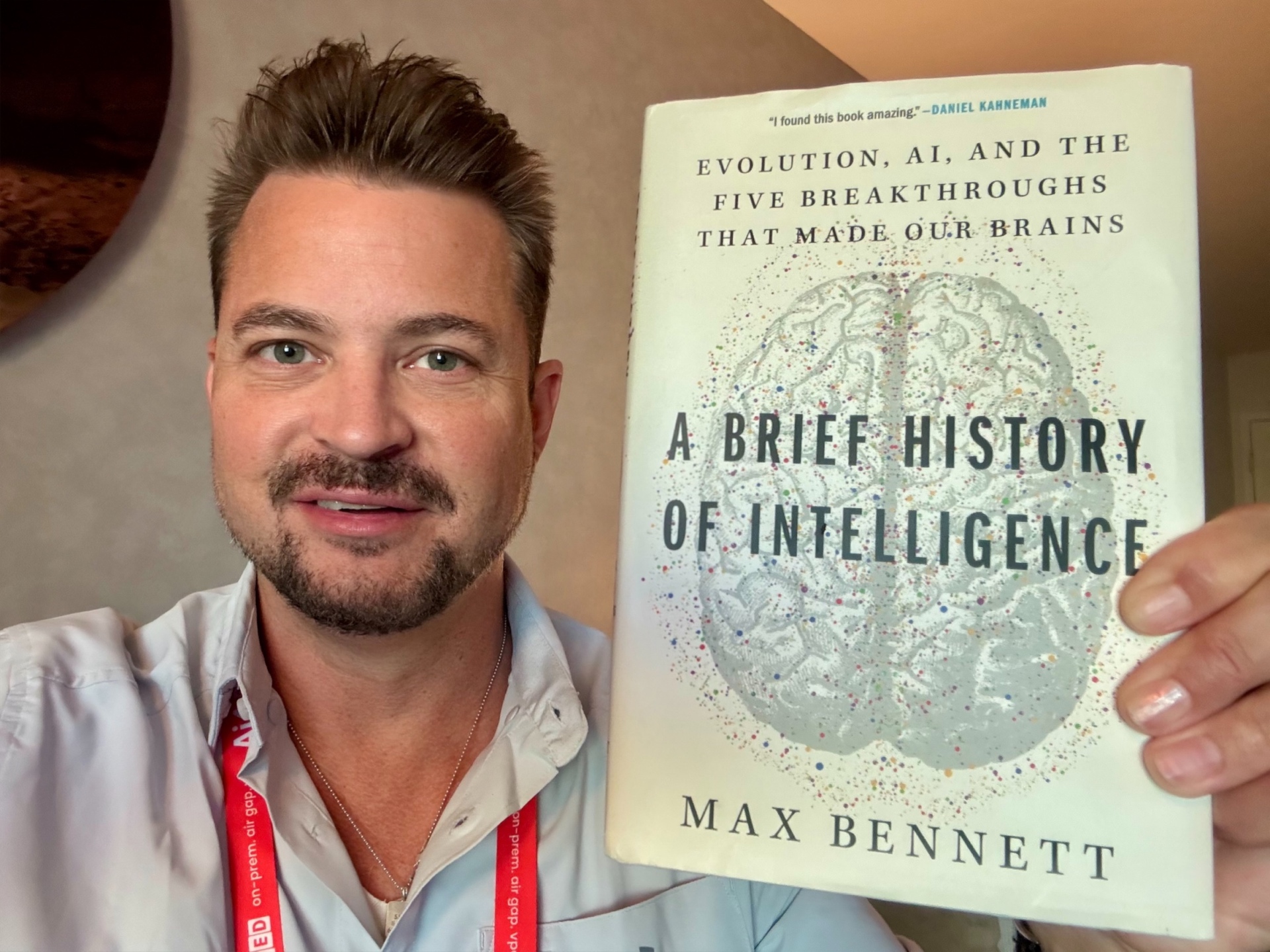
    Matt Mishak with A Brief History of Intelligence by Max Bennett

    A Brief History of Intelligence

    by Max Bennett

    For me, A Brief History of Intelligence wasn't just another science book — it was the most inspiring read of 2025. Max Bennett doesn't merely explain evolution and AI; he illuminates the arc of our cognitive journey from the simplest organisms to the complex minds we carry today and links that journey to the future of artificial intelligence in a way few authors have managed.

    Reading this book felt like a conversation with a brilliant guide who makes both neuroscience and AI feel vivid, urgent, and deeply meaningful. As someone immersed in law and technology, I found Bennett's insights not just informative but transformative — reminiscent of discussions at the Dartmouth Conference itself.

    Get the Book

    Praise from Visionaries

    "I found this book amazing. I read it through quickly because it was so interesting, then turned around and read much of it again."

    — Daniel Kahneman

    Nobel Laureate in Economics

    "I've been recommending A Brief History of Intelligence to everyone I know. A truly novel, beautifully crafted thesis on what intelligence is and how it has developed since the dawn of life itself."

    — Angela Duckworth

    Author of Grit

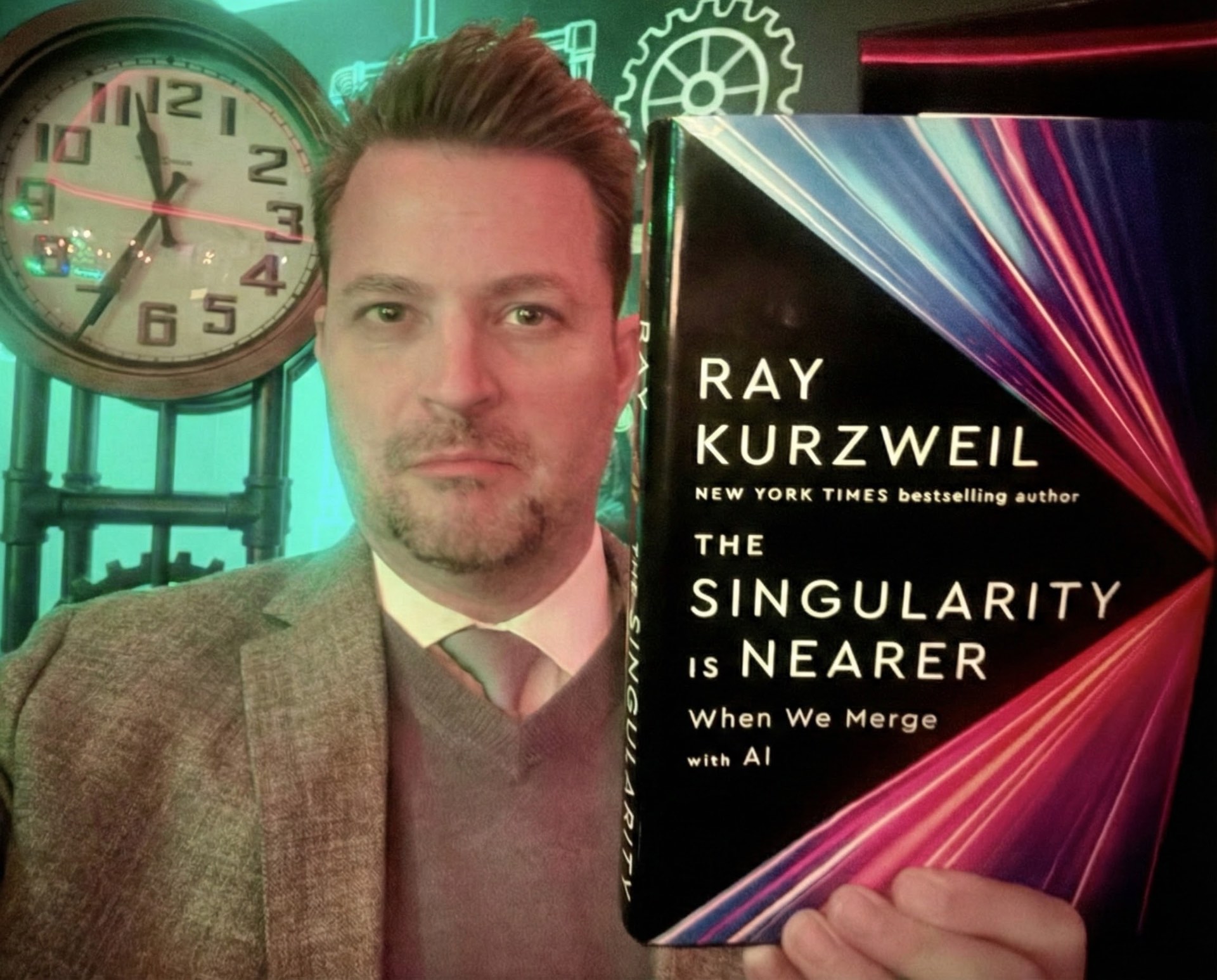
    Matt Mishak with The Singularity Is Nearer by Ray Kurzweil

    The Singularity Is Nearer

    by Ray Kurzweil

    Ray Kurzweil is not just a futurist — he's a prophet of exponential change. A student of Marvin Minsky, one of the founding minds behind the Dartmouth Conference, Kurzweil has been thinking about this moment longer than most institutions have been around.

    If you don't know Ray Kurzweil, you should. The Singularity Is Nearer makes one thing clear: the future isn't coming slowly — it's arriving all at once.

    Get the Book

    Praise from Visionaries

    "A fascinating exploration of our future, which raises the most profound philosophical questions."

    — Yuval Noah Harari

    Historian

    "Ray Kurzweil is the greatest oracle of our digital age. The Singularity Is Nearer is more than just a book—it's a survival guide for the technological renaissance we're about to experience."

    — Peter H. Diamandis, MD

    Futurist & Entrepreneur

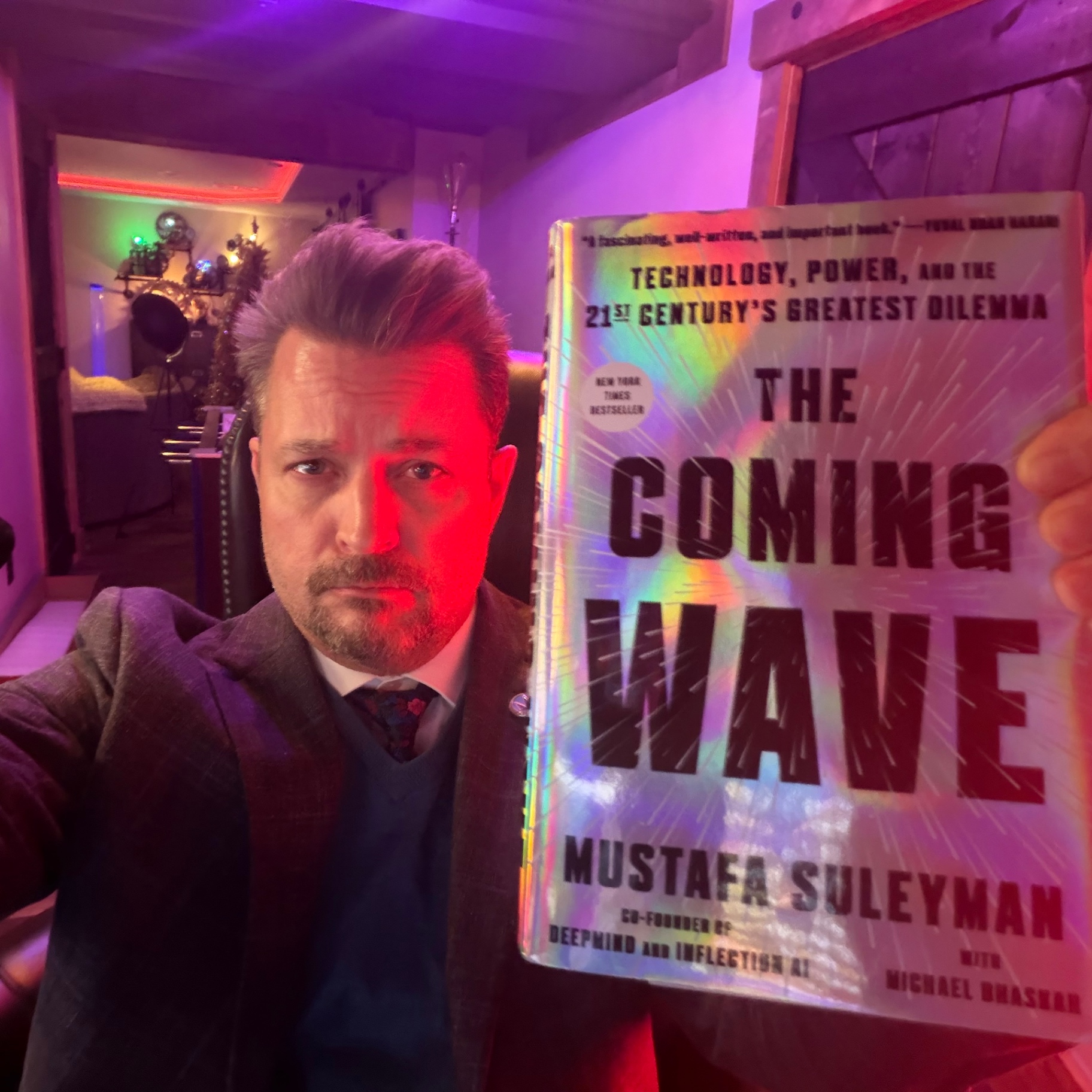
    Matt Mishak with The Coming Wave by Mustafa Suleyman

    The Coming Wave

    by Mustafa Suleyman & Michael Bhaskar

    This isn't a hype book about shiny tools. It's a sober, urgent examination of what happens when powerful technologies scale faster than our institutions, laws, and social norms. Suleyman's core message is simple but uncomfortable: the future is not something that merely happens to us. It requires participation.

    The coming wave of AI and biotechnology will not be safely "managed" by a small group of technologists or regulators alone. Containment, governance, and alignment demand broad engagement across professions, industries, and communities. Sitting on the sidelines is not a neutral position. Non-participation is still a choice, and usually a costly one.

    What makes this book especially relevant for LegalTek.ai is its insistence that responsibility must scale with capability. Lawyers, operators, founders, and leaders cannot outsource judgment to systems or defer hard questions to later. The work is now: designing guardrails, rethinking institutions, and choosing to engage rather than react. Participation is the point.

    Get the Book

    Praise from Visionaries

    "A fascinating, well-written, and important book."

    — Yuval Noah Harari

    Historian

    "One of the most important books of the year. Suleyman is one of the few people who truly understands both the promise and peril of AI."

    — Eric Schmidt

    Former CEO of Google

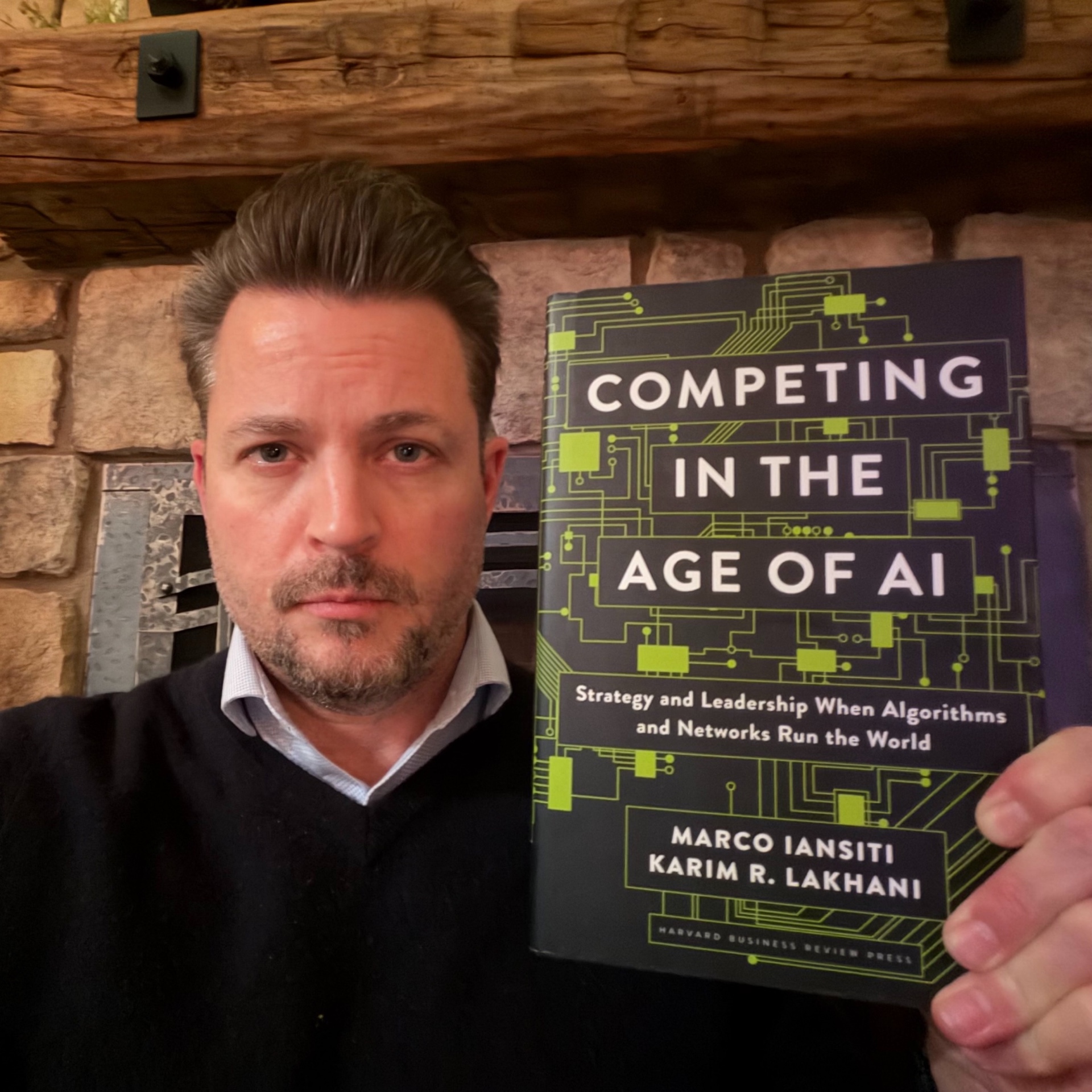
    Matt Mishak with Competing in the Age of AI by Marco Iansiti and Karim R. Lakhani

    Competing in the Age of AI

    by Marco Iansiti & Karim R. Lakhani

    Marco Iansiti and Karim R. Lakhani's Competing in the Age of AI is not a book about tools. It is a book about power, structure, and survival in an economy where software, data, and algorithms increasingly define competitive advantage. The central thesis is simple but unsettling: companies do not become AI-powered by sprinkling models on top of legacy processes. They must reorganize themselves around AI as a core operating logic.

    An AI-First organization treats data as infrastructure, not exhaust. Data lakes are not passive storage systems; they are living strategic assets continuously fed by operations, customers, and markets. The firms that win are those that design feedback loops where data improves models, models improve decisions, and decisions generate more data. This flywheel compounds faster than any traditional efficiency play.

    The book is particularly sharp on disruption. AI does not merely automate tasks; it collapses coordination costs. Entire layers of management, intermediaries, and professional gatekeepers become vulnerable when prediction and decision-making move closer to real time. This is why AI-driven firms tend to scale faster, operate with fewer humans per dollar of revenue, and exert outsized pressure on incumbents.

    Equally important is the authors' treatment of ethics and governance. AI systems embed values, whether intentionally or not. Bias, accountability, transparency, and trust are not compliance checkboxes; they are strategic concerns. Organizations that fail to govern AI responsibly risk regulatory backlash, reputational damage, and internal breakdowns of trust.

    Why this matters for LegalTek.ai: law, regulation, and professional services are precisely the kinds of industries ripe for AI-driven reconfiguration. Firms that treat AI as a bolt-on tool will fall behind. Firms that rethink workflows, data ownership, trust, and human judgment alongside AI will define the next era. If you are building, advising, regulating, or investing in the future of legal and professional services, this book belongs on your desk.

    Get the Book

    Praise from Visionaries

    "A compelling vision for how companies must transform to thrive in an AI-first world."

    — Satya Nadella

    CEO of Microsoft

    "Essential reading for any leader trying to understand how AI will reshape industries and competitive dynamics."

    — Reid Hoffman

    Co-founder of LinkedIn

    Matt Mishak with Nexus by Yuval Noah Harari

    Nexus

    by Yuval Noah Harari

    Nexus by Yuval Noah Harari is a foundational text for anyone trying to understand how information systems shape power, institutions, and human behavior—especially as we enter an AI-driven era. Harari reframes history not as a story of tools or even ideas, but as a story of networks: who controls information flows, how trust is manufactured, and how coordination scales.

    For LegalTek.ai, this book matters because law is itself an information network. Courts, statutes, contracts, evidence, compliance regimes, and now AI models are all nodes in a living system that governs behavior at scale. Harari makes one idea uncomfortably clear: technology does not just make systems faster—it reshapes who holds authority and how legitimacy is created.

    He explores how information networks drift toward concentration, how automated decision systems can harden power asymmetries, and how societies repeatedly mistake efficiency for wisdom. These themes map directly onto modern legal technology questions around AI-assisted decision-making, automated compliance, algorithmic evidence, and the risk of opaque systems replacing human judgment.

    Key insights: First, information systems always encode values—neutral tools do not exist. This reinforces the need for explicit governance, auditability, and human oversight in legal AI. Second, scale changes ethics—what works for a small network can become dangerous when automated and deployed broadly. Third, institutions lag technology—law historically reacts after power has already shifted.

    Nexus supports a core LegalTek.ai principle: AI in law must be human-centered, transparent, and institutionally aware. The future of legal technology is not about replacing lawyers—it is about redesigning legal systems so that intelligence, whether human or artificial, serves fairness, legitimacy, and trust at scale. Highly recommended for anyone building, regulating, or relying on AI-driven legal systems.

    Get the Book

    Praise from Visionaries

    "Harari has done it again. Nexus is a sweeping, thought-provoking exploration of how information has shaped human history—and how AI might reshape our future."

    — Bill Gates

    Co-founder of Microsoft

    "A masterful synthesis of history, technology, and human nature. Essential reading for understanding where we're headed."

    — Daniel Kahneman

    Nobel Laureate in Economics

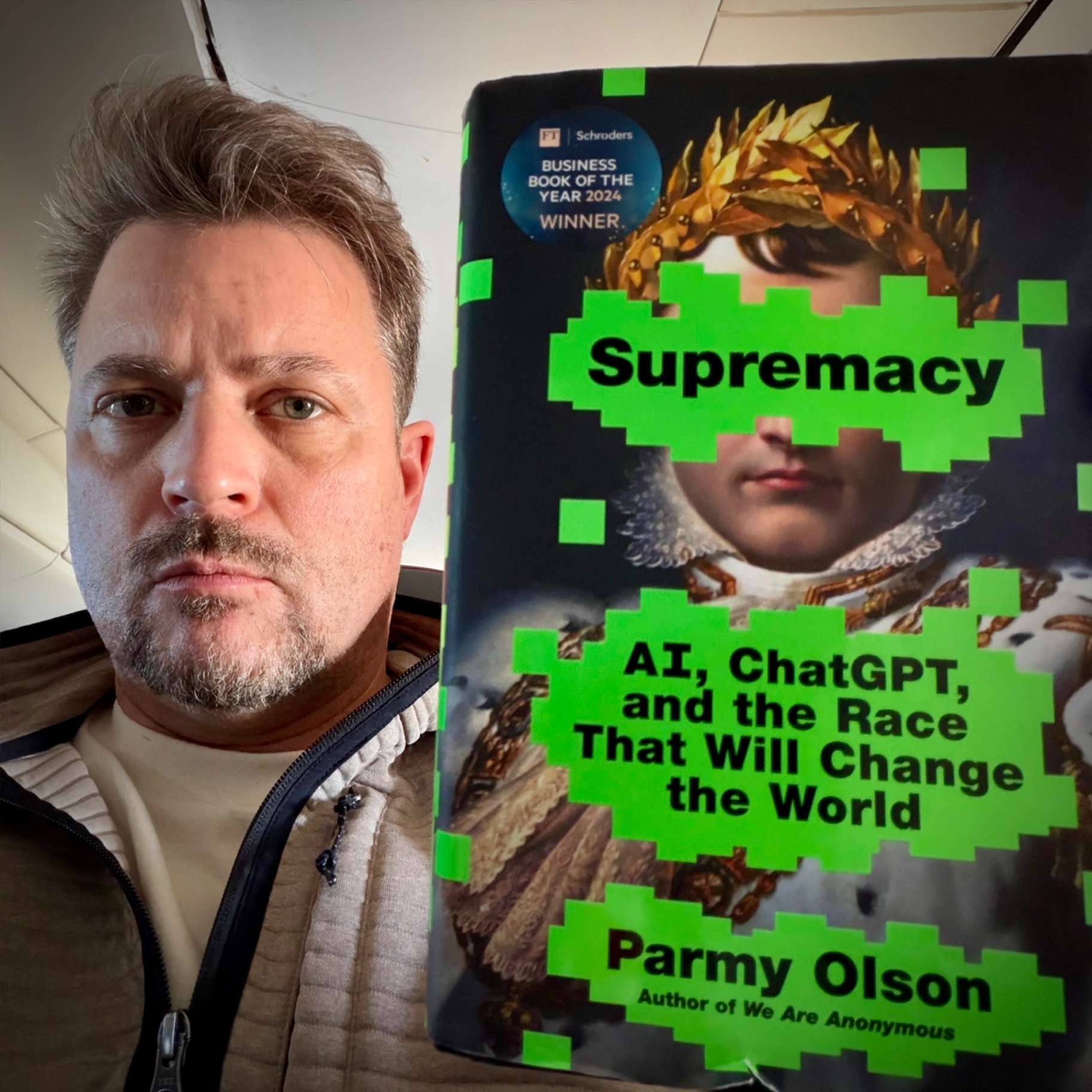
    Matt Mishak with Supremacy by Parmy Olson

    Supremacy

    by Parmy Olson

    Parmy Olson's Supremacy is the book I wish every lawyer, regulator, and founder would read before making their next move in AI. Winner of the Financial Times and Schroders Business Book of the Year 2024, this is not another breathless hype piece about what AI might do someday. It is a meticulously reported account of what has already happened — and what it means for power, competition, and control.

    Olson, a Bloomberg columnist and author of We Are Anonymous, brings a journalist's rigor and a storyteller's instinct to the AI arms race between OpenAI and Google DeepMind. She traces how a small number of researchers, executives, and investors are making decisions that will reshape every industry on earth — including law. The central tension is not technical; it is human: ambition versus caution, open research versus commercial secrecy, safety versus speed.

    What makes this book essential for LegalTek.ai readers is its unflinching examination of concentration risk. The foundation models that power legal AI products are controlled by a handful of companies. Olson documents how acquisitions, talent wars, and compute monopolies are narrowing the field in ways that should concern anyone building on top of these platforms. If you are a legal technology founder or an enterprise buyer evaluating AI vendors, this book provides the geopolitical and corporate context you cannot afford to ignore.

    Supremacy reinforces a core LegalTek.ai principle: understanding AI is not optional for legal professionals. The race for AI supremacy is not happening in a vacuum — it is reshaping the infrastructure of knowledge work itself. Lawyers who understand the forces Olson describes will be better positioned to advise clients, evaluate tools, and navigate the regulatory landscape that is still being written.

    Get the Book

    Praise from Visionaries

    "Astonishing... Olson has exclusive access to a network of high-level sources and she uses it to devastating effect."

    — Financial Times

    Business Book of the Year 2024

    "A deeply reported, utterly gripping account of the most consequential technology race of our time."

    — Tony Fadell

    Creator of the iPod, Author of Build

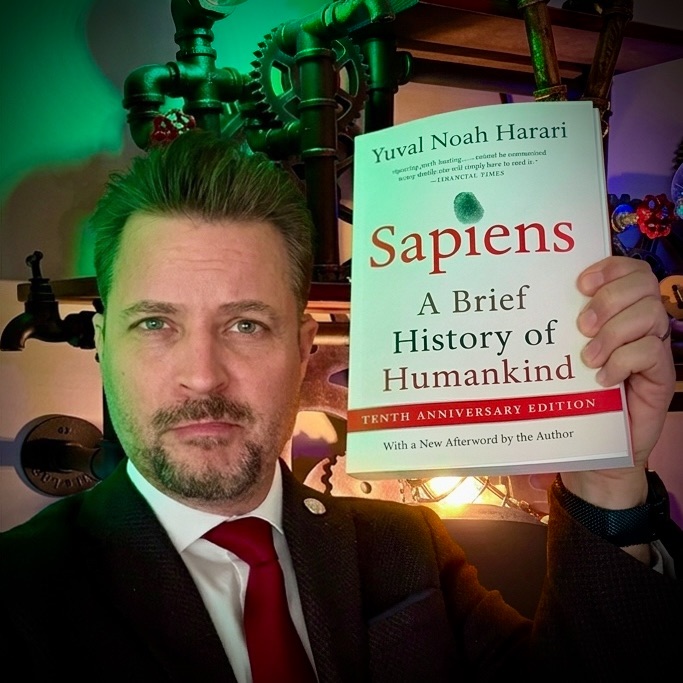
    Matt Mishak with Sapiens by Yuval Noah Harari

    Sapiens: A Brief History of Humankind

    by Yuval Noah Harari

    Sapiens is the book that rewired how I think about everything — law, technology, institutions, and human cooperation itself. Yuval Noah Harari doesn't just survey 70,000 years of human history; he dismantles the stories we tell ourselves about why civilization works. His central insight is deceptively simple: humans dominate the planet not because we are the smartest or strongest, but because we are the only species that can cooperate flexibly in large numbers — and we do it through shared fictions.

    For anyone in law or legal technology, this idea should hit like a thunderbolt. Laws, contracts, corporations, courts, constitutions — these are all shared fictions. They work because enough people believe in them. Harari forces you to see the scaffolding behind the systems we take for granted, and once you see it, you cannot unsee it.

    As AI begins to reshape how we create, interpret, and enforce these shared fictions, Sapiens becomes even more essential. If you want to understand where legal systems came from — and why they are so vulnerable to disruption — start here. This is the foundation that makes Nexus, The Coming Wave, and every other book on this list hit harder.

    Get the Book

    Praise from Visionaries

    "Interesting and provocative... It gives you a sense of how briefly we've been on this earth."

    — Barack Obama

    44th President of the United States

    "I would recommend this book to anyone interested in a fun, engaging look at early human history... You'll have a hard time putting it down."

    — Bill Gates

    Co-founder of Microsoft

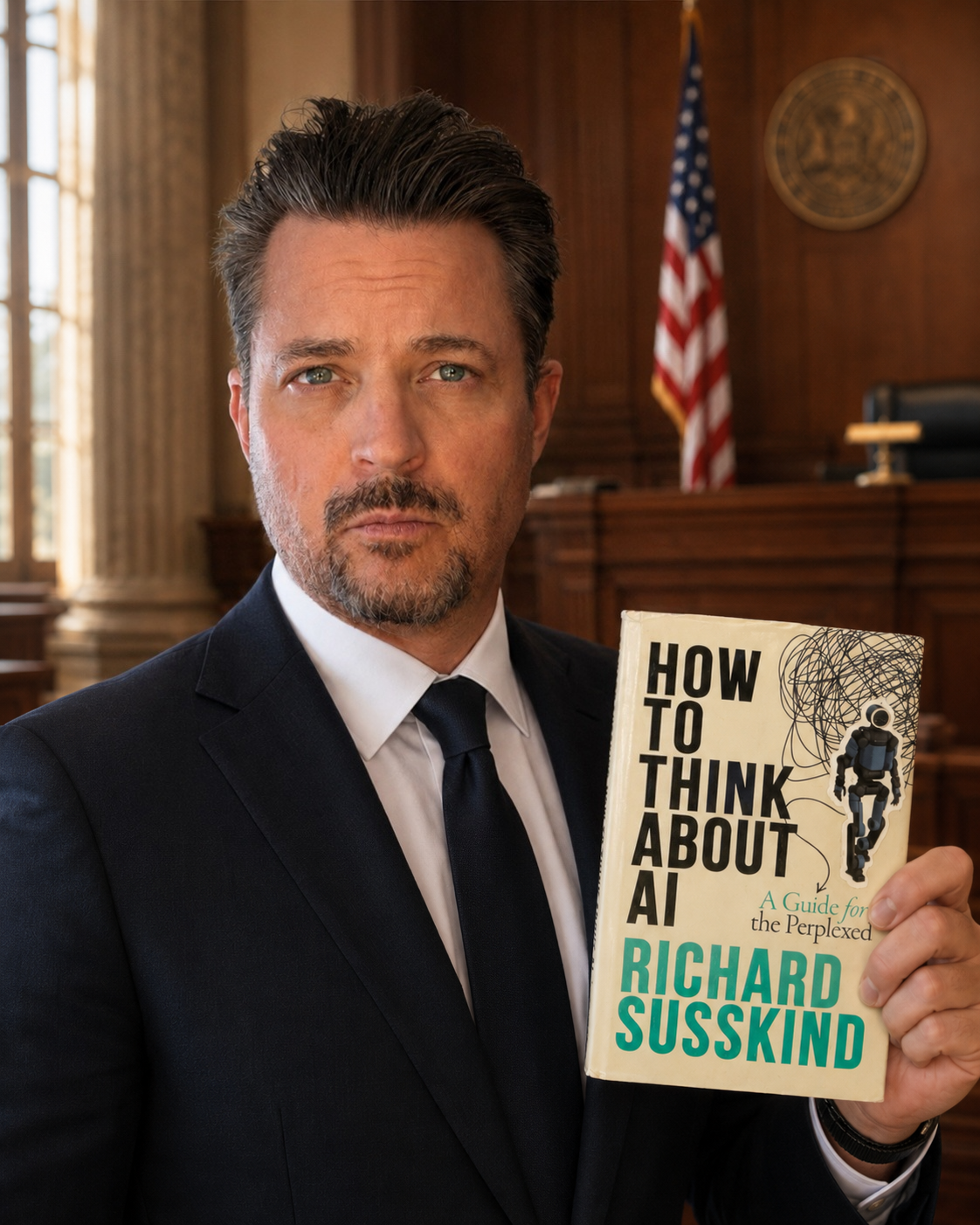
    Matt Mishak with How to Think About AI by Richard Susskind

    How to Think About AI: A Guide for the Perplexed

    by Richard Susskind

    Richard Susskind has spent four decades thinking about the future of professional work, and How to Think About AI is the distilled vocabulary every lawyer needs for the decade ahead. This is not a tactical book about prompts or tools — it is a structured way of thinking about what AI is, what it is becoming, and what it implies for the institutions that depend on human judgment.

    The chapter that most repays a careful read is Susskind's framing of the four long-run scenarios for the human–AI relationship: AI takeover, merger, peaceful coexistence, and shut-off. He treats each seriously, not as prediction but as the realistic shape of the possibility space. His argument is that any serious conversation about AI policy or professional practice has to hold all four open at once — and most public debate collapses prematurely into one.

    For Ohio attorneys orienting around the COUNSEL Framework, this book pairs naturally with ABA Formal Opinion 512 and the Ohio Supreme Court's AI Task Force Report. The opinions tell you what your duties are. Susskind helps you decide what you believe about where the technology is headed — and that belief shapes every governance and oversight choice that follows.

    Get the Book

    Praise from Visionaries

    "Susskind is the world's leading authority on the future of legal services and one of the most lucid writers on AI for non-specialists."

    — The Times (London)

    Review

    "An indispensable guide for anyone who wants to think clearly about what AI means for their work, their profession, and their life."

    — Daniel Susskind

    Author of A World Without Work

    Demand AI Transparency