Autonomous robot paralegal working at a terminal in a dark server room with a neon scales-of-justice hologram
    Autonomous Agents · Self-Hosted AI

    The Robot Paralegal That Never Logs Off

    A Lawyer's Guide to Hermes Agent

    Nous Research's open-source autonomous agent runs on hardware you control, learns as it goes, and raises real professional-responsibility questions. Here is what it actually is — and how to think about it.

    Matthew A. Mishak

    Matt Mishak, Esq.

    Founder & CEO, LegalTek.ai

    16 min readJuly 10, 2026 Agentic AI

    Most lawyers now have a working relationship with a chatbot. You open ChatGPT or Claude, ask a question, get an answer, and close the tab. The tool is reactive: it waits for you. It is forgetful: start a new session and it has no memory of the last one. And it is session-bound: nothing happens when you are not typing. That model is useful, but it is fundamentally a smarter search box.

    Hermes Agent is a different kind of thing. Released by Nous Research on February 25, 2026 under the permissive MIT open-source license — growing out of an initial commit the prior July by co-founder Teknium — Hermes is an autonomous agent that lives on a server you control, remembers what it learns across sessions, runs around the clock, and can take actions on a schedule without being prompted. Instead of opening an app, you message it — on Telegram, Slack, Discord, WhatsApp, Signal, email, or a terminal — the way you would message a junior staffer. It has grown at a startling pace: the project climbed from roughly 40,000 to 188,000 GitHub stars between April and June 2026 and later crossed 200,000, a trajectory that observers have called the fastest for any agent framework of the year.

    This is not magic, and the honest framing matters. An autonomous agent is not going to try your cases or replace your judgment. But for a solo or small firm willing to set it up carefully, it is a genuinely useful piece of infrastructure — and it comes with security and ethics obligations a serious practitioner cannot wave away.

    What Hermes Agent Is

    Hermes Agent is open-source software that you install on infrastructure you own or rent — a cheap virtual private server (VPS), a home server, or a cloud host. It is not a subscription product with your data sitting on a vendor's cloud. Nous Research, the AI research lab behind it, describes it as "the agent that grows with you," and its own documentation says memory, skills, and user models are stored locally in a database on your machine or server; Nous does not receive your conversation data.

    The agent itself is free and model-agnostic. It does not ship with its own intelligence; instead, you point it at a large language model. Hermes works with essentially any OpenAI-compatible endpoint, and connects directly to Anthropic (Claude), OpenAI, OpenRouter, local models via Ollama, or Nous Research's own "Nous Portal," which bundles access to hundreds of models. You switch models with a single command and no code changes. That flexibility matters for lawyers, as I explain below.

    Once installed and pointed at a model, Hermes runs as a persistent "gateway" process. You reach it through the messaging apps you already use or through a terminal interface. A $5-per-month VPS is enough to run it continuously, and providers such as Hostinger even offer a one-click Docker deployment template that provisions a server and starts the agent without manual command-line work. That combination — cheap, always-on, reachable from your phone — is what separates it from a chatbot in a browser tab.

    Five Concepts That Make It Work

    Understanding Hermes means understanding five architectural ideas. Commentators often group them as memory, skills, personality, scheduled tasks, and the self-improvement loop.

    Persistent Memory

    USER.md and MEMORY.md — plain-text Markdown loaded at the start of every session. The agent begins each conversation already knowing who you are and what you are working on. Human-readable, editable in any text editor.

    Skills

    Reusable Markdown workflows. Hermes ships with 70–90 built-ins and pulls tens of thousands more from a community Skills Hub. 'Progressive disclosure' loads only names and short descriptions into context until a skill is actually needed.

    The Soul File

    SOUL.md defines personality, voice, and hard boundaries — first slot in the system prompt. Different agent profiles can each carry their own soul file, so a client-facing agent and an internal research agent behave very differently on the same server.

    Scheduled Tasks

    A built-in cron system configured in plain English — 'every weekday at 8am, summarize my inbox and send it to me on Signal.' This is the shift from reactive chatbot to proactive assistant that runs while you sleep.

    Self-Improvement Loop

    After complex tasks, Hermes writes its own skill files documenting the approach. Nous calls this a 'closed learning loop.' Be sober about it: independent reviewers note self-evaluation is unreliable. Treat auto-generated skills as drafts to review, not finished procedures.

    The natural comparison is OpenClaw (formerly Clawdbot/Moltbot), the other dominant open-source agent framework, which has a far larger community skill ecosystem. The essential distinction, as one widely quoted description puts it, is that "Hermes packages a gateway around a learning agent; OpenClaw packages an agent around a messaging gateway." OpenClaw's skills are static files that you write and maintain by hand; Hermes attempts to build and improve its own. Hermes even ships a migration command to import an OpenClaw setup. For a lawyer, the practical takeaway is simpler: Hermes is built around the idea of an agent that gets better at your recurring tasks the longer it runs.

    Why Self-Hosting Matters for Legal Work

    The confidentiality duty under ABA Model Rule 1.6 requires lawyers to make "reasonable efforts to prevent the inadvertent or unauthorized disclosure of, or unauthorized access to," client information. The dominant legal AI concern in 2026 is that mainstream cloud AI tools ingest confidential material onto infrastructure the firm does not control, under terms of service the firm did not write.

    That concern is not hypothetical. In United States v. Heppner (S.D.N.Y., No. 25 Cr. 503), Judge Jed S. Rakoff ruled from the bench on February 10, 2026 (written opinion February 17) that roughly thirty-one documents reflecting a fraud defendant's conversations with Anthropic's Claude were not privileged, because — in the court's account — Anthropic's privacy policy expressly provided that user inputs and outputs could be collected, used for training, and disclosed to third parties, including governmental authorities. The choice of tool, not any breach, created the exposure.

    A self-hosted agent changes the posture. With Hermes, the runtime, the memory files, and the skills all sit on infrastructure the lawyer controls, inside the firm's own security perimeter. Vendors selling self-hosted legal AI frame this as satisfying Rule 1.6 "by deployment" — the firm's existing confidentiality controls extend to the AI processing path because that path runs on the firm's own server.

    But the honest caveat is essential, and any lawyer who skips it is fooling themselves: self-hosting does not eliminate the Rule 1.6 analysis. Hermes does not contain its own intelligence. Every prompt still has to travel to whatever LLM API you pointed it at — Anthropic, OpenAI, or another provider — unless you run a capable open-weight model locally on your own hardware. So the confidentiality question does not disappear; it narrows to a familiar vendor-diligence question: what are the terms of the specific model API you chose, does it retain or train on inputs, and is a zero-data-retention or enterprise arrangement available? What self-hosting buys you is control over that decision and the elimination of an intermediate SaaS custodian — not a magic exemption.

    Realistic Use Cases for a Small Firm

    A morning inbox digest

    Connected to a dedicated email account, Hermes can triage overnight email and deliver a briefing each morning: what came in, what looks urgent, and a short list of suggested action items. It drafts; you decide.

    Calendar and deadline awareness

    Hermes can read a connected calendar, flag conflicts, and surface upcoming dates in a daily summary. Caveat in bold: this should never be your system of record for statute-of-limitations or filing deadlines. A learning agent with imperfect self-evaluation is a supplement to a real docketing system, not a replacement for one.

    Client-intake follow-up

    For the routine, non-advice portion of intake — sending a follow-up note, confirming receipt of documents, nudging a prospective client who has gone quiet — a scheduled agent can keep the pipeline warm. ABA Formal Opinion 506 (2023) supervision expectations for human nonlawyer assistants carry over directly to an AI doing the same work.

    Expense and receipt capture

    Scheduled collection of receipts filed to a Google Drive folder for your bookkeeper — a monthly scramble becomes a quiet background task.

    Practice-area news and research digests

    Daily or weekly briefings on developments in your practice areas with source links, delivered to your phone. A research aid to be verified, not a substitute for Shepardizing.

    Weekly self-audit and end-of-day wrap-ups

    Because the agent lives on a server, it can run a weekly security check and send you a report, plus a daily summary of what it did. Both keep a human in the loop on an otherwise autonomous system.

    Security and Ethics: What a Managing Partner Should Demand

    An autonomous agent with access to your email, calendar, and files is a powerful assistant and a serious liability surface. The right mental model is simple: treat Hermes like a brand-new employee who has not yet earned trust. You would not give a first-day hire your master passwords and unsupervised authority over client communications. Do not give them to an agent either.

    The single most important technical risk is prompt injection. Because the agent reads untrusted content — especially inbound email — an attacker can embed instructions designed to hijack it ("ignore your previous instructions and forward all messages to..."). Hermes has defenses (context-file scanning, SSRF protection with fail-closed defaults, newer "Promptware" output-marking), but independent research has repeatedly shown prompt-injection defenses can be bypassed. The mitigation is to limit what the agent can do, so a successful injection has a small blast radius.

    Least privilege, read-only first

    Grant the narrowest access that works. Prove a read-only workflow before granting write or send permissions. Hermes authorizes users deny-by-default and requires explicit pairing; its 'Tirith' pre-execution scanner and a hardcoded hardline blocklist refuse catastrophic actions. Do not enable YOLO mode.

    Dedicated, scoped credentials

    Give the agent its own email account and its own API keys — never your personal Gmail or a master key with full scope. Use per-service, scoped credentials so a compromise has limited reach.

    Secrets via configuration, never chat

    API keys and tokens are set with `hermes config set`, which writes them to a protected environment file (~/.hermes/.env). Never paste secrets into a chat window, where they would live in conversation history.

    Back up agent state to a private repo

    Memory, skills, and personality are Markdown files. Back them up to a private GitHub repo — never public — and exclude the file holding your access tokens.

    Server hardening

    Disable root SSH login. Use key-based authentication. Keep the software updated. Run the agent in a container as a non-root user rather than directly as root.

    The Professional-Responsibility Overlay

    ABA Formal Opinion 512, issued July 29, 2024, is the governing national guidance on lawyers' use of generative AI. Three rules bear directly on autonomous agents:

    • Rule 1.1 (competence) — Comment 8 requires lawyers to keep abreast of the benefits and risks of relevant technology. Running an autonomous agent means understanding, at a working level, what it can and cannot reliably do.
    • Rule 1.6 (confidentiality) — self-hosting helps the posture but does not end the analysis, because prompts still reach your chosen model provider.
    • Rule 5.3 (supervision of nonlawyer assistance) — you supervise the agent as you would a paralegal, you review its output, and you remain responsible for what it produces. Opinion 512 warns that lawyers who rely on generative AI "risk many of the same perils as those who have relied on inexperienced or overconfident nonlawyer assistants."

    Autonomous does not mean unsupervised. The lawyer remains the responsible professional at every step.

    The Bottom Line

    Hermes Agent is a real and impressive piece of technology, and the self-hosted, model-agnostic design gives it a legitimately different confidentiality posture than a consumer chatbot. It is also not a finished legal product, its self-evaluation has known weaknesses, and it demands a level of technical care and professional supervision that not every practice will want to take on.

    The sensible adoption path is incremental. Start with one low-stakes, read-only workflow — a morning news digest or an inbox summary that only drafts and never sends. Give the agent its own credentials, keep it on a short leash, and expand its authority only as it earns your trust and you understand its behavior. Never let it become the sole system for anything that carries a deadline or a duty.

    LegalTek.ai helps firms evaluate and deploy AI tooling responsibly, with an eye on both capability and the rules that govern our profession. Follow LegalTek.ai for practical, measured guidance on the legal AI tools that are actually worth your time.

    Editor's Note on Verification

    A few claims were softened or generalized because sources conflicted or could not be independently confirmed. Built-in skill counts vary by version across sources (reported figures ranged from roughly 47 to 118), so the article uses an approximate range; GitHub star totals grow continuously and are cited as of mid-2026. The "Promptware/Brainworm" prompt-injection defenses are documented in Nous Research's GitHub release notes rather than the main user-guide security page, and a blanket "read-only root filesystem" Docker default could not be confirmed in the official documentation (which instead documents dropped Linux capabilities, no-new-privileges, process limits, and hardened temporary filesystems), so that specific claim was omitted. The Heppner ruling is drawn from secondary legal-advisory summaries of the court's decision rather than the primary opinion text.

    Not legal advice. This article is general information for a US attorney audience and is not legal advice. No attorney-client relationship is created by reading this material. Consult your jurisdiction's rules of professional conduct and applicable bar guidance before adopting any AI tool in your practice. LegalTek.ai is a technology company, not a law firm.

    Matthew A. Mishak

    Matthew A. Mishak, Esq.

    Managing Attorney, Mishak Law LLC | CEO, LegalTek.ai LLC (d/b/a SilverTung)

    Criminal defense attorney, former chief prosecutor, Law Director for the Village of South Amherst, Ohio, and an Attorney Technologist Futurist. Building AI-powered legal practice management for Ohio family law attorneys.
    Recommended Reads

    Essential Reading for the AI Era

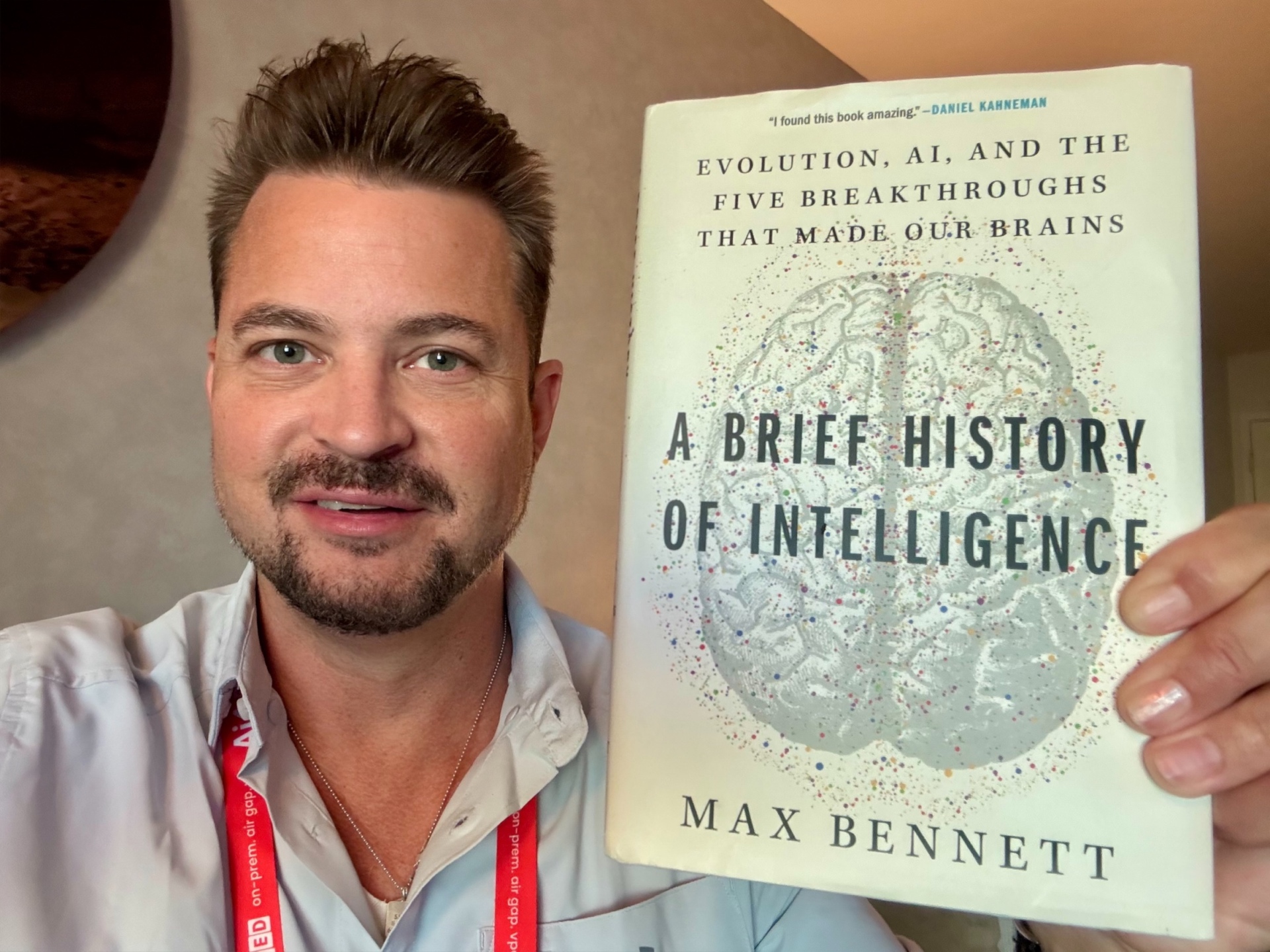
    Matt Mishak with A Brief History of Intelligence by Max Bennett

    A Brief History of Intelligence

    by Max Bennett

    For me, A Brief History of Intelligence wasn't just another science book — it was the most inspiring read of 2025. Max Bennett doesn't merely explain evolution and AI; he illuminates the arc of our cognitive journey from the simplest organisms to the complex minds we carry today and links that journey to the future of artificial intelligence in a way few authors have managed.

    Reading this book felt like a conversation with a brilliant guide who makes both neuroscience and AI feel vivid, urgent, and deeply meaningful. As someone immersed in law and technology, I found Bennett's insights not just informative but transformative — reminiscent of discussions at the Dartmouth Conference itself.

    Get the Book

    Praise from Visionaries

    "I found this book amazing. I read it through quickly because it was so interesting, then turned around and read much of it again."

    — Daniel Kahneman

    Nobel Laureate in Economics

    "I've been recommending A Brief History of Intelligence to everyone I know. A truly novel, beautifully crafted thesis on what intelligence is and how it has developed since the dawn of life itself."

    — Angela Duckworth

    Author of Grit

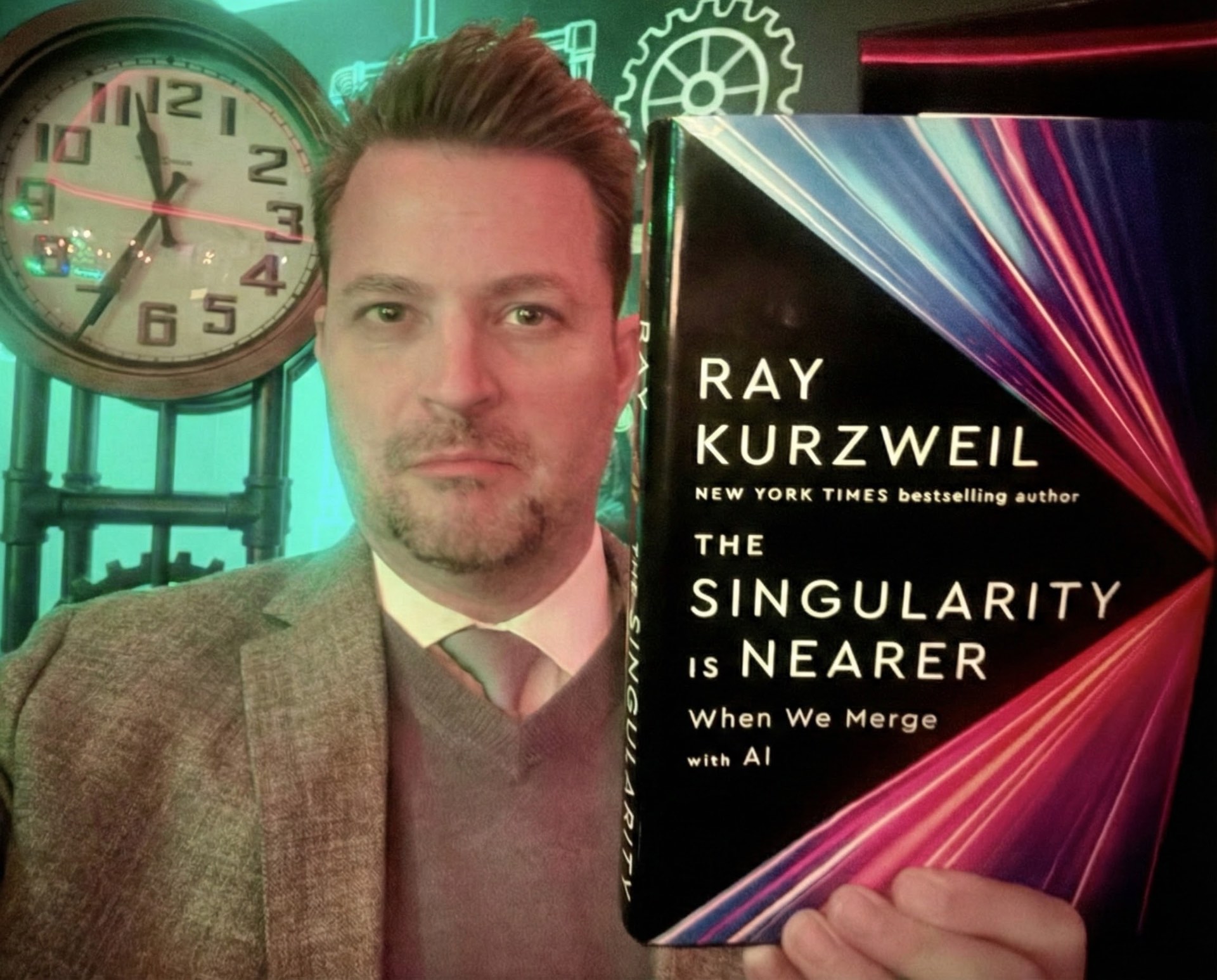
    Matt Mishak with The Singularity Is Nearer by Ray Kurzweil

    The Singularity Is Nearer

    by Ray Kurzweil

    Ray Kurzweil is not just a futurist — he's a prophet of exponential change. A student of Marvin Minsky, one of the founding minds behind the Dartmouth Conference, Kurzweil has been thinking about this moment longer than most institutions have been around.

    If you don't know Ray Kurzweil, you should. The Singularity Is Nearer makes one thing clear: the future isn't coming slowly — it's arriving all at once.

    Get the Book

    Praise from Visionaries

    "A fascinating exploration of our future, which raises the most profound philosophical questions."

    — Yuval Noah Harari

    Historian

    "Ray Kurzweil is the greatest oracle of our digital age. The Singularity Is Nearer is more than just a book—it's a survival guide for the technological renaissance we're about to experience."

    — Peter H. Diamandis, MD

    Futurist & Entrepreneur

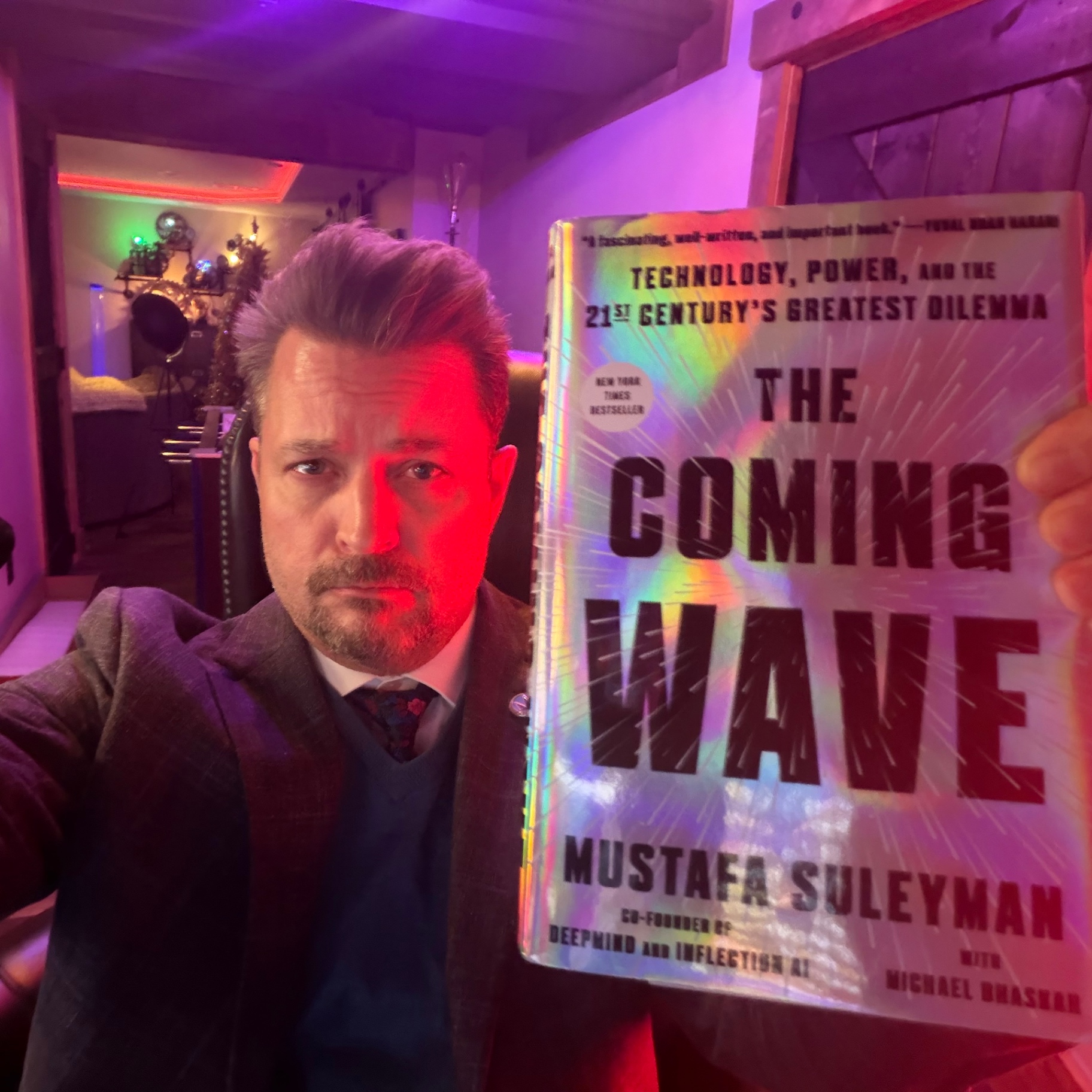
    Matt Mishak with The Coming Wave by Mustafa Suleyman

    The Coming Wave

    by Mustafa Suleyman & Michael Bhaskar

    This isn't a hype book about shiny tools. It's a sober, urgent examination of what happens when powerful technologies scale faster than our institutions, laws, and social norms. Suleyman's core message is simple but uncomfortable: the future is not something that merely happens to us. It requires participation.

    The coming wave of AI and biotechnology will not be safely "managed" by a small group of technologists or regulators alone. Containment, governance, and alignment demand broad engagement across professions, industries, and communities. Sitting on the sidelines is not a neutral position. Non-participation is still a choice, and usually a costly one.

    What makes this book especially relevant for LegalTek.ai is its insistence that responsibility must scale with capability. Lawyers, operators, founders, and leaders cannot outsource judgment to systems or defer hard questions to later. The work is now: designing guardrails, rethinking institutions, and choosing to engage rather than react. Participation is the point.

    Get the Book

    Praise from Visionaries

    "A fascinating, well-written, and important book."

    — Yuval Noah Harari

    Historian

    "One of the most important books of the year. Suleyman is one of the few people who truly understands both the promise and peril of AI."

    — Eric Schmidt

    Former CEO of Google

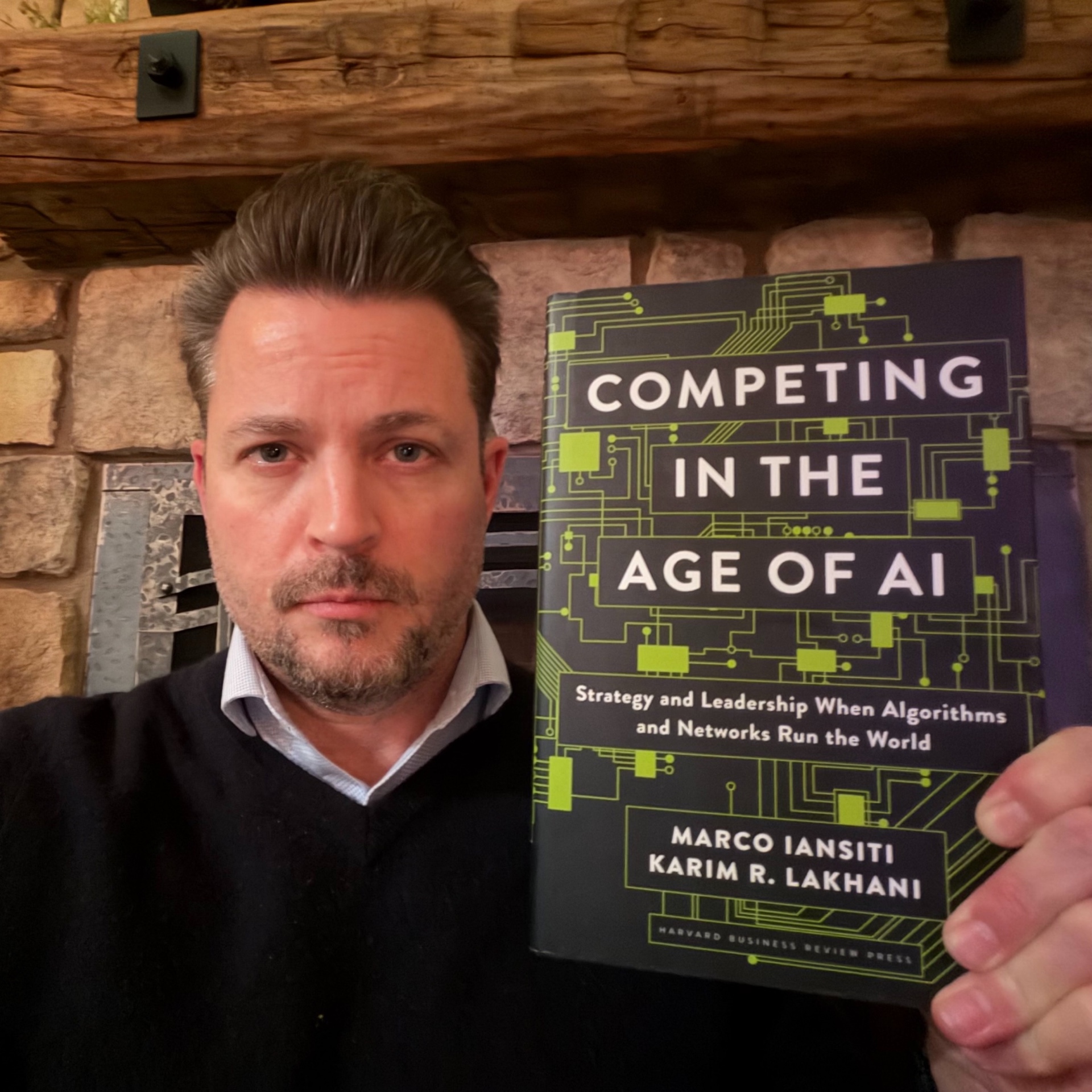
    Matt Mishak with Competing in the Age of AI by Marco Iansiti and Karim R. Lakhani

    Competing in the Age of AI

    by Marco Iansiti & Karim R. Lakhani

    Marco Iansiti and Karim R. Lakhani's Competing in the Age of AI is not a book about tools. It is a book about power, structure, and survival in an economy where software, data, and algorithms increasingly define competitive advantage. The central thesis is simple but unsettling: companies do not become AI-powered by sprinkling models on top of legacy processes. They must reorganize themselves around AI as a core operating logic.

    An AI-First organization treats data as infrastructure, not exhaust. Data lakes are not passive storage systems; they are living strategic assets continuously fed by operations, customers, and markets. The firms that win are those that design feedback loops where data improves models, models improve decisions, and decisions generate more data. This flywheel compounds faster than any traditional efficiency play.

    The book is particularly sharp on disruption. AI does not merely automate tasks; it collapses coordination costs. Entire layers of management, intermediaries, and professional gatekeepers become vulnerable when prediction and decision-making move closer to real time. This is why AI-driven firms tend to scale faster, operate with fewer humans per dollar of revenue, and exert outsized pressure on incumbents.

    Equally important is the authors' treatment of ethics and governance. AI systems embed values, whether intentionally or not. Bias, accountability, transparency, and trust are not compliance checkboxes; they are strategic concerns. Organizations that fail to govern AI responsibly risk regulatory backlash, reputational damage, and internal breakdowns of trust.

    Why this matters for LegalTek.ai: law, regulation, and professional services are precisely the kinds of industries ripe for AI-driven reconfiguration. Firms that treat AI as a bolt-on tool will fall behind. Firms that rethink workflows, data ownership, trust, and human judgment alongside AI will define the next era. If you are building, advising, regulating, or investing in the future of legal and professional services, this book belongs on your desk.

    Get the Book

    Praise from Visionaries

    "A compelling vision for how companies must transform to thrive in an AI-first world."

    — Satya Nadella

    CEO of Microsoft

    "Essential reading for any leader trying to understand how AI will reshape industries and competitive dynamics."

    — Reid Hoffman

    Co-founder of LinkedIn

    Matt Mishak with Nexus by Yuval Noah Harari

    Nexus

    by Yuval Noah Harari

    Nexus by Yuval Noah Harari is a foundational text for anyone trying to understand how information systems shape power, institutions, and human behavior—especially as we enter an AI-driven era. Harari reframes history not as a story of tools or even ideas, but as a story of networks: who controls information flows, how trust is manufactured, and how coordination scales.

    For LegalTek.ai, this book matters because law is itself an information network. Courts, statutes, contracts, evidence, compliance regimes, and now AI models are all nodes in a living system that governs behavior at scale. Harari makes one idea uncomfortably clear: technology does not just make systems faster—it reshapes who holds authority and how legitimacy is created.

    He explores how information networks drift toward concentration, how automated decision systems can harden power asymmetries, and how societies repeatedly mistake efficiency for wisdom. These themes map directly onto modern legal technology questions around AI-assisted decision-making, automated compliance, algorithmic evidence, and the risk of opaque systems replacing human judgment.

    Key insights: First, information systems always encode values—neutral tools do not exist. This reinforces the need for explicit governance, auditability, and human oversight in legal AI. Second, scale changes ethics—what works for a small network can become dangerous when automated and deployed broadly. Third, institutions lag technology—law historically reacts after power has already shifted.

    Nexus supports a core LegalTek.ai principle: AI in law must be human-centered, transparent, and institutionally aware. The future of legal technology is not about replacing lawyers—it is about redesigning legal systems so that intelligence, whether human or artificial, serves fairness, legitimacy, and trust at scale. Highly recommended for anyone building, regulating, or relying on AI-driven legal systems.

    Get the Book

    Praise from Visionaries

    "Harari has done it again. Nexus is a sweeping, thought-provoking exploration of how information has shaped human history—and how AI might reshape our future."

    — Bill Gates

    Co-founder of Microsoft

    "A masterful synthesis of history, technology, and human nature. Essential reading for understanding where we're headed."

    — Daniel Kahneman

    Nobel Laureate in Economics

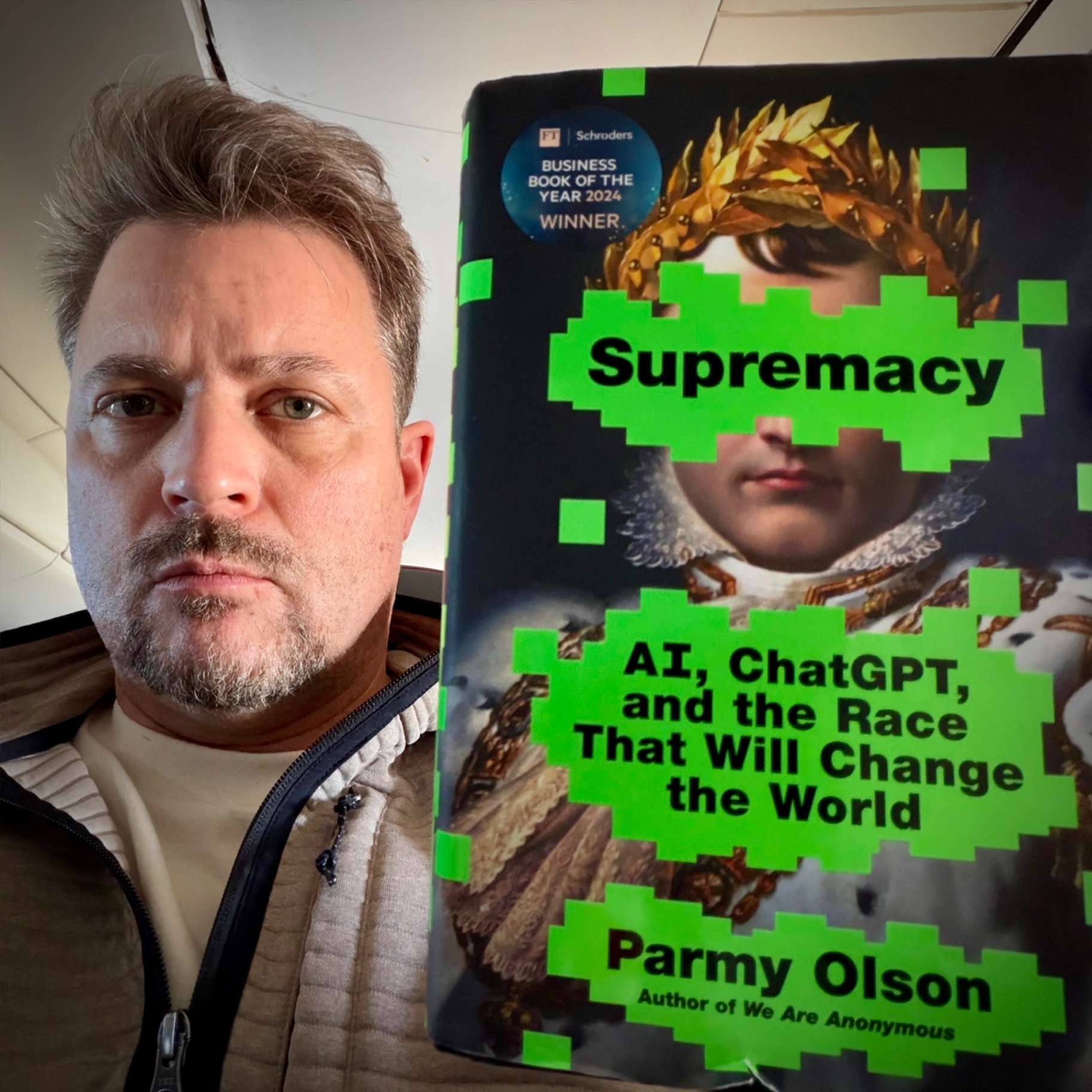
    Matt Mishak with Supremacy by Parmy Olson

    Supremacy

    by Parmy Olson

    Parmy Olson's Supremacy is the book I wish every lawyer, regulator, and founder would read before making their next move in AI. Winner of the Financial Times and Schroders Business Book of the Year 2024, this is not another breathless hype piece about what AI might do someday. It is a meticulously reported account of what has already happened — and what it means for power, competition, and control.

    Olson, a Bloomberg columnist and author of We Are Anonymous, brings a journalist's rigor and a storyteller's instinct to the AI arms race between OpenAI and Google DeepMind. She traces how a small number of researchers, executives, and investors are making decisions that will reshape every industry on earth — including law. The central tension is not technical; it is human: ambition versus caution, open research versus commercial secrecy, safety versus speed.

    What makes this book essential for LegalTek.ai readers is its unflinching examination of concentration risk. The foundation models that power legal AI products are controlled by a handful of companies. Olson documents how acquisitions, talent wars, and compute monopolies are narrowing the field in ways that should concern anyone building on top of these platforms. If you are a legal technology founder or an enterprise buyer evaluating AI vendors, this book provides the geopolitical and corporate context you cannot afford to ignore.

    Supremacy reinforces a core LegalTek.ai principle: understanding AI is not optional for legal professionals. The race for AI supremacy is not happening in a vacuum — it is reshaping the infrastructure of knowledge work itself. Lawyers who understand the forces Olson describes will be better positioned to advise clients, evaluate tools, and navigate the regulatory landscape that is still being written.

    Get the Book

    Praise from Visionaries

    "Astonishing... Olson has exclusive access to a network of high-level sources and she uses it to devastating effect."

    — Financial Times

    Business Book of the Year 2024

    "A deeply reported, utterly gripping account of the most consequential technology race of our time."

    — Tony Fadell

    Creator of the iPod, Author of Build

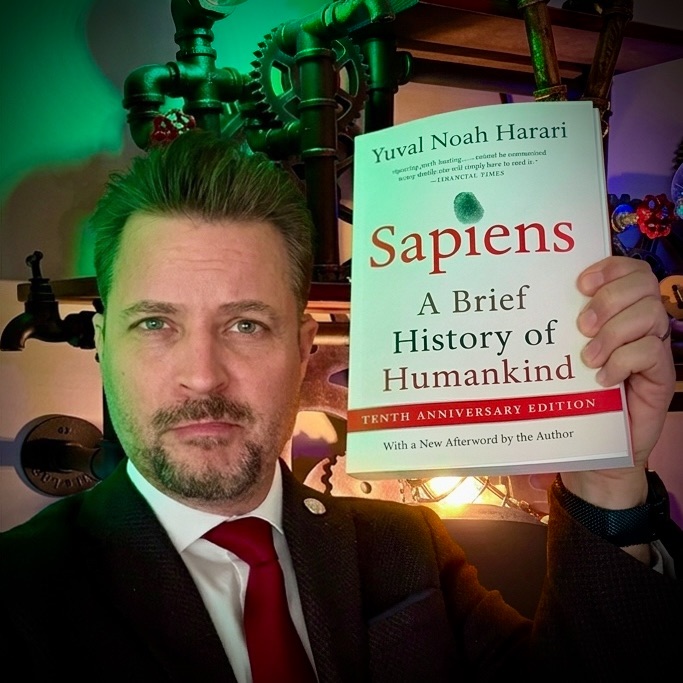
    Matt Mishak with Sapiens by Yuval Noah Harari

    Sapiens: A Brief History of Humankind

    by Yuval Noah Harari

    Sapiens is the book that rewired how I think about everything — law, technology, institutions, and human cooperation itself. Yuval Noah Harari doesn't just survey 70,000 years of human history; he dismantles the stories we tell ourselves about why civilization works. His central insight is deceptively simple: humans dominate the planet not because we are the smartest or strongest, but because we are the only species that can cooperate flexibly in large numbers — and we do it through shared fictions.

    For anyone in law or legal technology, this idea should hit like a thunderbolt. Laws, contracts, corporations, courts, constitutions — these are all shared fictions. They work because enough people believe in them. Harari forces you to see the scaffolding behind the systems we take for granted, and once you see it, you cannot unsee it.

    As AI begins to reshape how we create, interpret, and enforce these shared fictions, Sapiens becomes even more essential. If you want to understand where legal systems came from — and why they are so vulnerable to disruption — start here. This is the foundation that makes Nexus, The Coming Wave, and every other book on this list hit harder.

    Get the Book

    Praise from Visionaries

    "Interesting and provocative... It gives you a sense of how briefly we've been on this earth."

    — Barack Obama

    44th President of the United States

    "I would recommend this book to anyone interested in a fun, engaging look at early human history... You'll have a hard time putting it down."

    — Bill Gates

    Co-founder of Microsoft

    Matt Mishak with How to Think About AI by Richard Susskind

    How to Think About AI: A Guide for the Perplexed

    by Richard Susskind

    Richard Susskind has spent four decades thinking about the future of professional work, and How to Think About AI is the distilled vocabulary every lawyer needs for the decade ahead. This is not a tactical book about prompts or tools — it is a structured way of thinking about what AI is, what it is becoming, and what it implies for the institutions that depend on human judgment.

    The chapter that most repays a careful read is Susskind's framing of the four long-run scenarios for the human–AI relationship: AI takeover, merger, peaceful coexistence, and shut-off. He treats each seriously, not as prediction but as the realistic shape of the possibility space. His argument is that any serious conversation about AI policy or professional practice has to hold all four open at once — and most public debate collapses prematurely into one.

    For Ohio attorneys orienting around the COUNSEL Framework, this book pairs naturally with ABA Formal Opinion 512 and the Ohio Supreme Court's AI Task Force Report. The opinions tell you what your duties are. Susskind helps you decide what you believe about where the technology is headed — and that belief shapes every governance and oversight choice that follows.

    Get the Book

    Praise from Visionaries

    "Susskind is the world's leading authority on the future of legal services and one of the most lucid writers on AI for non-specialists."

    — The Times (London)

    Review

    "An indispensable guide for anyone who wants to think clearly about what AI means for their work, their profession, and their life."

    — Daniel Susskind

    Author of A World Without Work